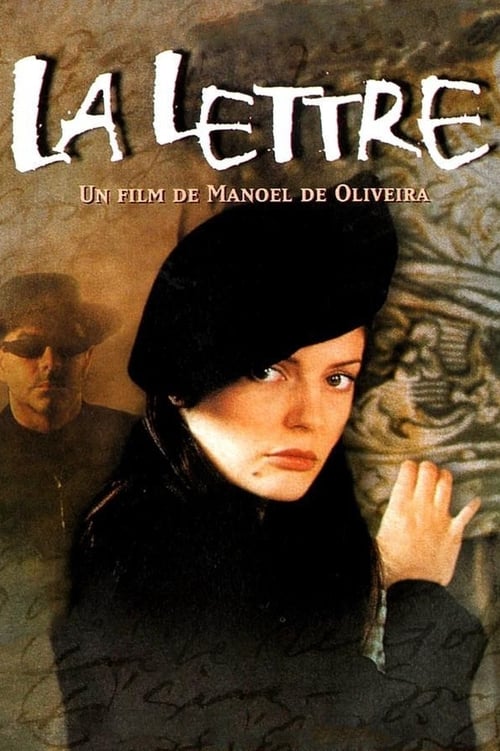
The Letter
1999
No user ratings available yet
Diversity score: 5.3 out of 10

2006
Director
Manoel de Oliveira
Runtime
137 minutes
Average Rating
No ratings yetSynopsis
Luciano, fresh out of jail, was taken by his brother, Flórido, to serve in the home of wealthy Alfreda. He was surprised when she told him that her greatest desire was to see the Virgin Mary. Now comes this rich land owner with her sublime pretensions. Isn't it enough for her to have an Aston Martin and a Jaguar in the garage and ten different dresses per season? It was all professor Heschel's fault. Or someone else's. Anyway, to go beyond the promise is heresy. Alfreda said that she wouldn't rest until she saw the Virgin and made her some questions. Filipe Quinta, the Forger, says he has a solution. Meanwhile, Bahia, her husband, listens do music.
Overall Score
Limited
Category Breakdown
LGBTQ+ Representation
The film lacks explicit depictions of non-cisnormative identities or same-sex intimacy. The narrative focuses instead on existentialist monologues and the shared aging process of the primary characters.
Gender Representation
Characters engage in high-level philosophical debate, suggesting a shared intellectual agency between men and women. However, the heavy emphasis on monologue-driven storytelling may limit character-driven interactions.
Racial & Ethnic Diversity
The film features a predominantly white, European cast consistent with its Portuguese setting. There is no evidence of color-blind casting or intentional integration of diverse ethnic backgrounds.
Religious & Cultural Diversity
The story engages with themes of subjective morality and the fallibility of memory. It avoids overt anti-Western critiques, focusing instead on the individual's relationship with time and existence.
Disability Representation
There is no prominent depiction of visible or invisible disabilities. The film avoids using disability as a narrative device but lacks agency-driven representation of neurodivergence or physical disability.
Strengths
Areas for Improvement
AI Analysis
Magic Mirror is a contemplative chamber drama that prioritizes intellectual discourse over traditional plot progression. It functions as a postmodern exploration of memory and existential weight rather than a social commentary. The film's demographic composition is largely homogeneous, reflecting its specific Portuguese setting and the director's established aesthetic. This results in a lack of intersectional visibility across racial and LGBTQ+ categories. While the film subverts some gendered hierarchies through intellectual parity, its focus remains deeply inward, centering on individual philosophical inquiry rather than broader social or cultural representation.
1999

1993
1991

1975

2009

2007
2010
1991

2023

2017
1963
1984
No reviews yet. Be the first to share your thoughts on this movie!
Use the rating form above to leave a star rating and optional review.