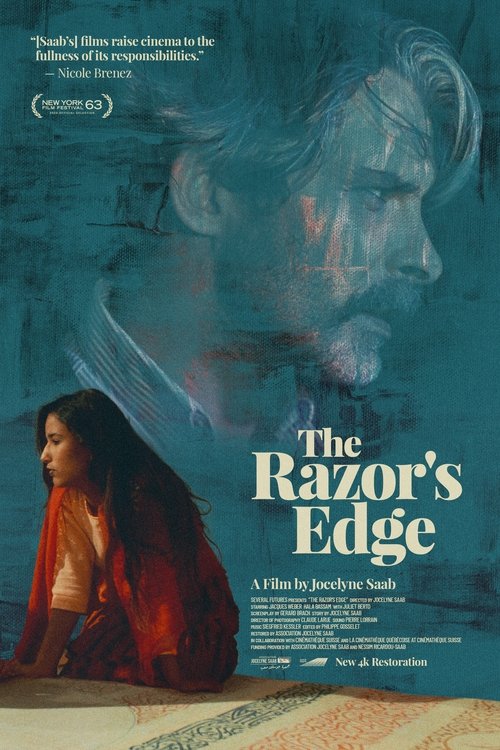
The Razor's Edge
1985
No user ratings available yet
Representation score: 9.0 out of 10
Representation Score
Good
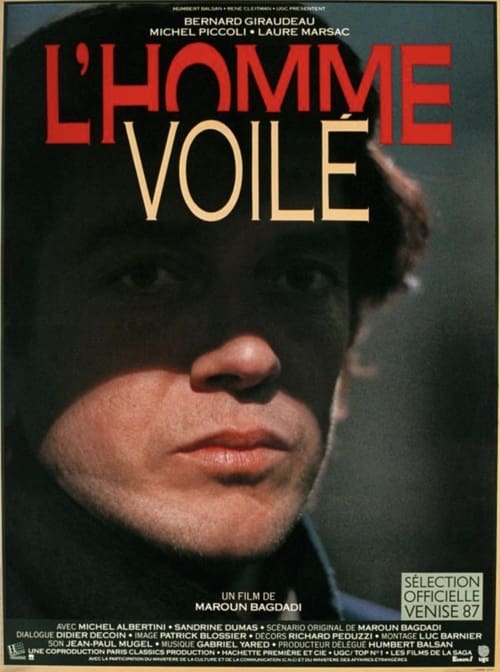
1987
Director
Maroun Bagdadi
Runtime
93 minutes
Average Rating
No ratings yetNew Showbiz Analysis
This film stands out as a powerful example of regional storytelling that challenges Western cinematic conventions. It achieves authenticity through its Arab cast and explores post-colonial themes from a non-Western perspective. Its main strength lies in its nuanced depiction of Middle Eastern identity and the complexities of displacement. However, it falls short in providing explicit narratives focused on LGBTQ+ individuals or those with disabilities.
Category Breakdown
The film focuses on interpersonal relationships and the impact of war on families. It doesn't delve deeply into stories involving non-straight or non-cisgender identities or challenge the idea that everyone is straight.
Claire, a young woman, is central to the story as she navigates a world defined by male-driven violence. She plays a significant role in the narrative, but women are often shown as victims of ongoing conflicts.
The film features an authentic Arab cast, avoiding the common practice of casting white actors in roles traditionally played by Arabs. Ethnic and cultural identities are integral to the plot.
The story critiques political structures through a lens of moral relativism. It emphasizes the subjective experiences of those displaced, moving away from Western-centric viewpoints.
The film shows the psychological and physical tolls of war. However, it doesn't focus on characters with disabilities who take active roles in addressing their conditions.
Present on Screen
Limited or Absent
Official Synopsis
Claire (Laure Marsac) is a 16-year-old young woman who discovers her father Pierre (Bernard Giraudeau) is not a healing physician but a killer with a bloody war record in the Lebanese conflict. She runs away from home and into the arms of Kamal (Michal Albertini). While Pierre stalks two terrorists, Claire and Kamal are violently confronted by Kamal's abandoned wife and family. The ravages of the conflict extend to those who are never participants in the battle but are among the casualties of war.
1985
1994
1975

2005
1991
1997
1998
2004
No reviews yet. Be the first to share your thoughts on this movie!
Use the rating form above to leave a star rating and optional review.