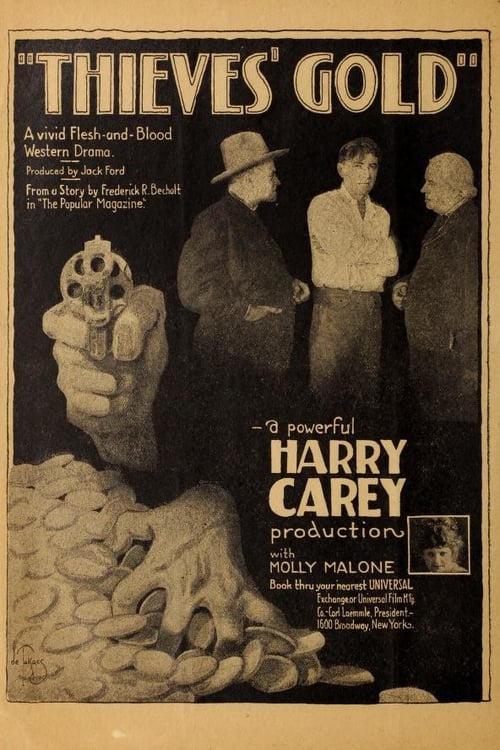
Thieves' Gold
1918
No user ratings available yet
Diversity score: 2.7 out of 10

1922
PassedDirector
Bernard J. Durning
Runtime
50 minutes
Average Rating
No ratings yetSynopsis
George Kirby steals a mining claim from Tom Curtis and forces him to become an outlaw. Years later, Curtis comes to the rescue when Anne Kirby is kidnapped by real outlaws, but when he finds out she is married to his enemy, he decides to hold her captive.
Overall Score
Limited
Category Breakdown
LGBTQ+ Representation
The film follows a conventional heteronormative structure. The plot centers on marriage and romantic conflict without any evidence of non-cisnormative identities.
Gender Representation
Anne Kirby serves as a central figure of conflict, yet she lacks independent agency. The narrative is driven by the moral dilemmas and actions of the male characters.
Racial & Ethnic Diversity
The story focuses on a localized conflict between white settlers and outlaws. There is no indication of diverse casting or a non-Anglo-Saxon majority.
Religious & Cultural Diversity
The film operates within the traditional Western mythos of frontier justice. It emphasizes individual property rights and personal grievances rather than systemic critiques.
Disability Representation
The narrative contains no mention of characters with visible or invisible disabilities.
Strengths
Areas for Improvement
AI Analysis
Iron to Gold is a product of early Hollywood genre filmmaking, adhering strictly to the traditionalist standards of the 1920s Western. The story relies on established archetypes and moral binaries, focusing on themes of theft, outlawry, and rescue. The narrative architecture reinforces standard hierarchies. Male characters drive the plot through their conflicts over mining claims and kidnapping, while female characters function primarily as catalysts for male action rather than independent agents. Overall, the film lacks intersectional complexity or systemic disruption. It presents a narrow, conventional view of the American frontier that aligns with the era's standard casting and storytelling tropes.
1918
1937
1922

1927
1954
1926
1950
1937
1920
1924
1949
1937
No reviews yet. Be the first to share your thoughts on this movie!
Use the rating form above to leave a star rating and optional review.