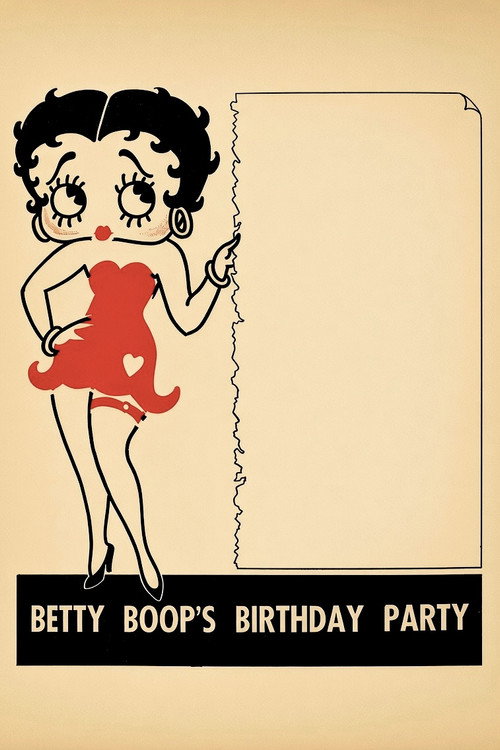
Betty Boop's Birthday Party
1933
No user ratings available yet
Representation score: 1.2 out of 10
Representation Score
Minimal
1933
Director
Dave Fleischer
Runtime
6 minutes
Average Rating
No ratings yetNew Showbiz Analysis
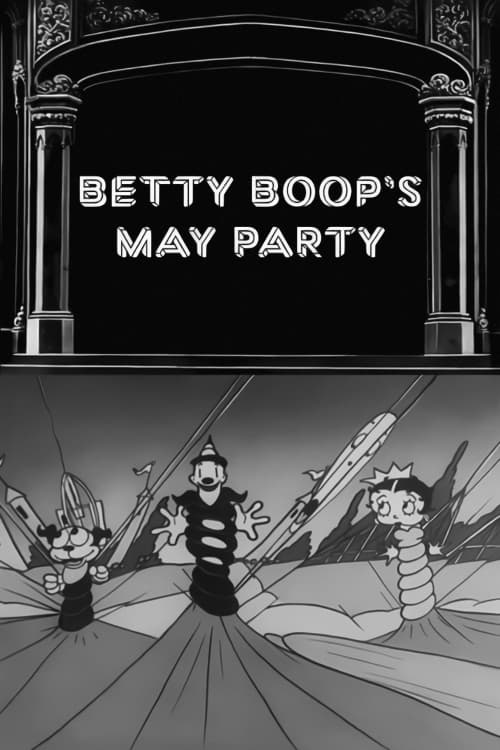
Betty Boop's May Party is a technically advanced surrealist animation that prioritizes dream-like logic and rhythmic escapism over social complexity. While the Fleischer Studios team innovates visually, the narrative remains grounded in the conventional social expectations of the 1930s. The film lacks depth in representing LGBTQ+ identities or disabilities. Its focus on anthropomorphic characters also prevents meaningful engagement with racial or ethnic diversity. Ultimately, the short serves as a celebratory musical piece. It excels as avant-garde entertainment but offers minimal disruption to the cultural and gender hierarchies of its time.
Category Breakdown
The film highlights the romantic relationship between Betty Boop and Bimbo. It does not include any queer subtext or non-straight identities.
Betty Boop holds a prominent role as the Queen of the May, emphasizing performative femininity and flirtation. Her character follows traditional gender roles from the 1930s.
The use of anthropomorphic characters prevents meaningful racial or ethnic representation. The homogeneous, non-human cast avoids caricatures but lacks diverse identity blending.
The film centers on seasonal May Day celebrations and communal joy. It functions as pure escapist entertainment without engaging in systemic or cultural critiques.
Characters are shown as physically robust during musical dance sequences. There is no exploration of neurodivergence or physical impairment.
Present on Screen
Limited or Absent
Official Synopsis
Betty and Bimbo, as Queen and King of the May, host a giant outdoor party that gets sprayed with rubber. Koko appears briefly.
1933
1932
1932
1933
1932
1933
1932
1931
No reviews yet. Be the first to share your thoughts on this movie!
Use the rating form above to leave a star rating and optional review.