Garden Store - Part 1: Family Friend
2017
No user ratings available yet
Representation score: 5.4 out of 10
Representation Score
Fair
1972
Director
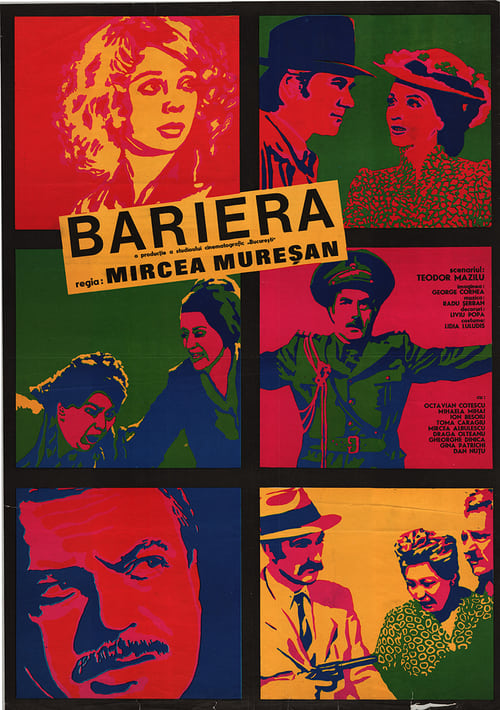
Mircea Mureșan
Runtime
97 minutes
Average Rating
No ratings yetNew Showbiz Analysis
Bariera is a historical drama that emphasizes the exploration of systemic corruption and personal moral choices over diverse identity representation. It successfully critiques traditional social and religious structures, providing a nuanced look at how political upheaval affects family stability. Though the film lacks visible LGBTQ+ or multi-ethnic representation, it excels in its critique of institutional power. The tension between an honest individual and a corrupting environment drives the historical commentary. Ultimately, the film's strength lies in its ideological complexity rather than its broad demographic representation.
Category Breakdown
The film doesn't show any explicit LGBTQ+ identities or relationships outside of traditional heterosexual ones. The story mainly focuses on the breakdown of the traditional family structure.
Rădița demonstrates female independence by navigating a world focused on war profits. However, the main conflicts in the story are driven by male characters.
Set in 1942 Romania, the film features a mostly homogenous ethnic background. Characters are defined more by their economic status and political stance than by their ethnicity.
The film sharply criticizes religious authority and traditional institutions. It portrays the church as a source of exclusion rather than a sanctuary.
There is no information about the portrayal of physical or neurodivergent disabilities in this film.
Present on Screen
Limited or Absent
Official Synopsis
In 1942, Nea' Vitu is in trouble with his children: a son is fascinated by the world of war profiteers, and the daughter is going around with the speculator "Treispemii" (Dan Nutu). On the evening of her engagement, Vitu is denounced by his son for hiding an illegal printing press in a painter's house. Thirty years later, he returns to the slum and searches for the Vitu family. They no longer live there, the neighbors have changed, and he investigates to find out what happened to them. Nea Vițu, you raise your daughter, Rădița, and son Fănică. His wife Dorina died when Fănică was born. Apparently, family problems are difficult barriers to overcome. He's an honest man. He gets angry at the slick Fănică. Fănică is also chased away by the slum priest, because he wanted to make a new bible... where he'd be Fănică the God .... Rădița goes around with the speculator "Treispemii". In 1942, nea Vițu joins the fight against the Nazis and runs an illegal printing house with a painter...
2017

2014
2004
1985

1980

2022

1976

1966
No reviews yet. Be the first to share your thoughts on this movie!
Use the rating form above to leave a star rating and optional review.