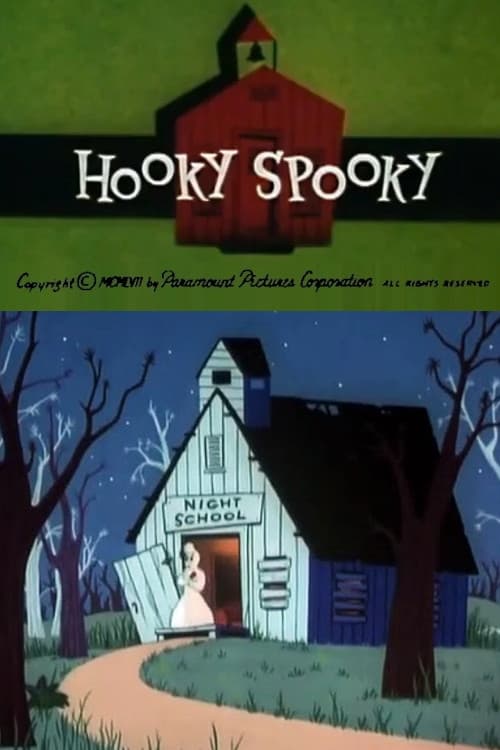
Hooky Spooky
1957
No user ratings available yet
Diversity score: 1.3 out of 10
No Poster Available
1958
ApprovedDirector
Izzy Sparber
Runtime
6 minutes
Average Rating
No ratings yetSynopsis
Not unlike Casper the Friendly Ghost, little Spunky the Burro, is having a hard time finding a friend, so he takes a horse from a carousel and sets out to visit the fair with his synthetic, and non-responding, friend. Spunky tries hard to impress the merry-go-round horse various booths and exhibitions but the horse remains unimpressed...and mute. Spunky finally takes him back to where he got him.
Overall Score
Minimal
Category Breakdown
LGBTQ+ Representation
The film contains no evidence of non-heteronormative identities or queer subtext. The central interaction involves a biological character and an inanimate object.
Gender Representation
Gender hierarchies are absent because the characters are anthropomorphized animals and a synthetic object. No traditional gender roles or power dynamics are present.
Racial & Ethnic Diversity
The cast consists entirely of non-human entities. There is no framework for analyzing racial or ethnic identity within this animated context.
Religious & Cultural Diversity
The story follows a traditional, linear fable structure. It lacks any critique of Western institutions, capitalism, or organized religion.
Disability Representation
The horse's silence is due to its status as an inanimate object. There is no meaningful representation of neurodivergence or physical disability.
Strengths
Areas for Improvement
AI Analysis
Okey Dokey Donkey is a simplistic mid-century fable centered on Spunky the Burro's lonely quest for companionship. The narrative relies on a one-sided relationship between a living animal and a mute, synthetic carousel horse. Because the characters are non-human or inanimate, the film avoids complex social dynamics. It functions as a standard character study of isolation rather than a tool for social commentary. The film adheres to conventional storytelling tropes of the 1950s, offering no engagement with intersectional identities or systemic power structures.
1957
1952
1953
1952
1955
1938
1945
1952
1949
1945
1951
1952
No reviews yet. Be the first to share your thoughts on this movie!
Use the rating form above to leave a star rating and optional review.