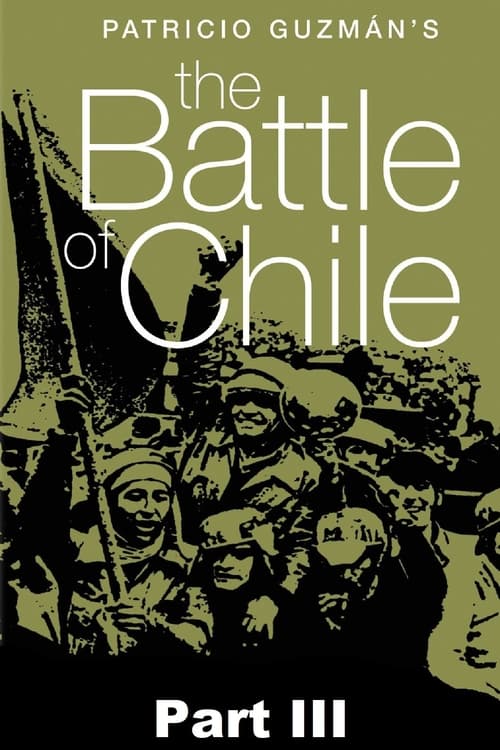
The Battle of Chile: Part III
1979
No user ratings available yet
Representation score: 7.2 out of 10
Representation Score
Good
2004
PGDirector
Patricio Guzmán
Runtime
100 minutes
Average Rating
No ratings yetNew Showbiz Analysis
Patricio Guzmán’s documentary provides a strong critique of Western hegemony and institutional power. It succeeds by centering the Chilean working class and the struggle for national sovereignty against foreign intervention. The film excels in its cultural depth, framing political history through social justice rather than traditional Western morality. It effectively uses class-based struggles to challenge established global power structures. However, the film remains largely focused on masculine-coded political spheres of the 1970s. It lacks explicit focus on LGBTQ+ identities and individual narratives of disability or neurodivergence.
Category Breakdown
The film focuses on large-scale political movements and male-dominated areas such as military and state leadership. It does not center LGBTQ+ identities or non-cisgender narratives.
While the main political actors are mostly male, the film highlights women's roles in grassroots movements. It portrays women as active participants in social change rather than just domestic figures.
The documentary centers on the Chilean working class and the economic realities of mestizo communities. This approach challenges Anglo-centric narratives by emphasizing the ability to act of the Chilean people.
The film offers a nuanced critique of Western institutional dominance and capitalism. It presents the Allende administration through the lens of social justice and the rights of underrepresented groups.
The narrative focuses on collective political bodies and historical figures. While the trauma of the military coup is a central theme, individual stories of disability are not highlighted.
Present on Screen
Limited or Absent
Official Synopsis
A leftist revolutionary or a reformist democrat? A committed Marxist or a constitutionalist politician? An ethical and moral man or, as Richard Nixon called him, a "son of a bitch"? In SALVADOR ALLENDE, acclaimed Chilean filmmaker Patricio Guzmán (The Battle of Chile and Chile, Obstinate Memory) returns to his native country thirty years after the 1973 military coup that overthrew Chile's Popular Unity government to examine the life of its leader, Salvador Allende, both as a politician and a man.
1979
2017
1975
2019

1976
2015

1973
2012
No reviews yet. Be the first to share your thoughts on this movie!
Use the rating form above to leave a star rating and optional review.