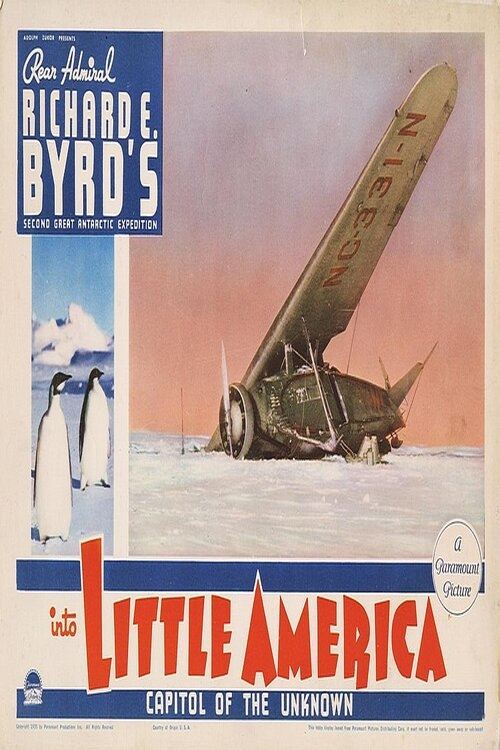
Into Little America
1935
No user ratings available yet
Representation score: 0.2 out of 10
Representation Score
Minimal
1930
PassedDirector
Julian Johnson
Runtime
82 minutes
Average Rating
No ratings yetNew Showbiz Analysis
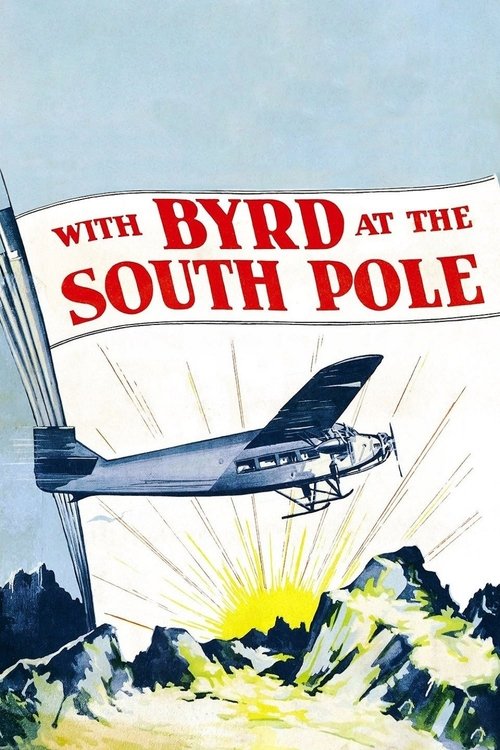
With Byrd at the South Pole is a historical document reflecting the demographics of the 1930s. The film focuses on the logistics and achievements of Rear Admiral Richard E. Byrd's expedition, resulting in a narrow social scope. The production prioritizes Western scientific and military success, lacking multi-layered depth. While it provides a significant record of geographic discovery, it does not challenge or expand upon the social norms of its era.
Category Breakdown
The film does not include any LGBTQ+ characters or narratives. It follows the assumption that everyone is straight or cisgender.
The film centers on a masculine environment where leadership roles are held by men. There is no evidence of women taking control or challenging traditional roles.
The documentary focuses on a Western expeditionary mission. It lacks a cast that includes diverse ethnic perspectives.
The film highlights Western exploration and institutional achievement. It emphasizes Western leadership and the pursuit of geographic knowledge through a traditional lens.
There is no specific evidence regarding the portrayal of characters with visible or invisible disabilities as distinct narrative agents.
Present on Screen
Limited or Absent
Official Synopsis
With Byrd at the South Pole (1930) is a documentary film about Rear Admiral Richard E. Byrd and his 1st quest to the South Pole beginning at the Little America-Exploration Base. The film's soundtrack consists mostly of music and sound effects, with narration read by Floyd Gibbons. The film won at the 3rd Academy Awards for Best Cinematography.
1935

1935

1924

1938

1933

2007

1919
1923
No reviews yet. Be the first to share your thoughts on this movie!
Use the rating form above to leave a star rating and optional review.