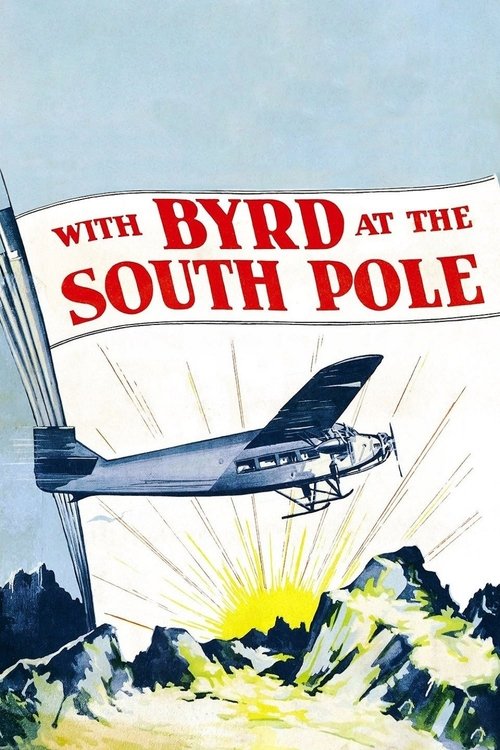
With Byrd at the South Pole
1930
No user ratings available yet
Representation score: 1.0 out of 10
Representation Score
Minimal
1935
ApprovedDirector
Frances March, Ewing Scott
Runtime
53 minutes
Average Rating
No ratings yetNew Showbiz Analysis
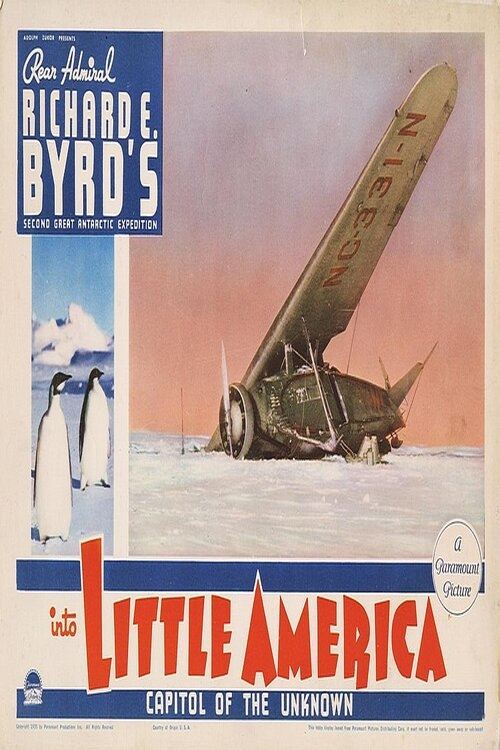
Into Little America is a historical documentary that captures Admiral Byrd's 1934 Antarctic expedition. As a product of 1935, it emphasizes observational realism and scientific documentation over social commentary or narrative subversion. The film adheres to the norms of its time, focusing on a Western-centric perspective of discovery. It lacks diverse representation, concentrating instead on traditional masculine leadership and scientific achievements. Ultimately, the work serves primarily as a record of a specific historical event rather than a platform for diverse storytelling.
Category Breakdown
The film does not include any LGBTQ+ characters or non-cisgender identities. It focuses solely on the scientific mission without addressing any LGBTQ+ themes.
Leadership roles in the film are centered around traditional masculine traits of command and exploration. Women play minor roles and have limited influence over the narrative.
The film reflects the demographics of early 20th-century Western expeditions, showing a homogeneous group of explorers without any non-white representation.
The documentary highlights the technological and exploratory capabilities of Western nations. It upholds traditional values of patriotism and scientific rigor.
The film does not depict any subjects with visible or invisible disabilities. The baseline for participation in the expedition is physical capability.
Present on Screen
Limited or Absent
Official Synopsis
This film is a 53-minute documentary of Admiral Byrd's second Antarctic expedition in 1934. Paramount Pictures sent two cameramen along to film this expedition
1930

1935

1924

1938

1933

1948
1919
1957
No reviews yet. Be the first to share your thoughts on this movie!
Use the rating form above to leave a star rating and optional review.