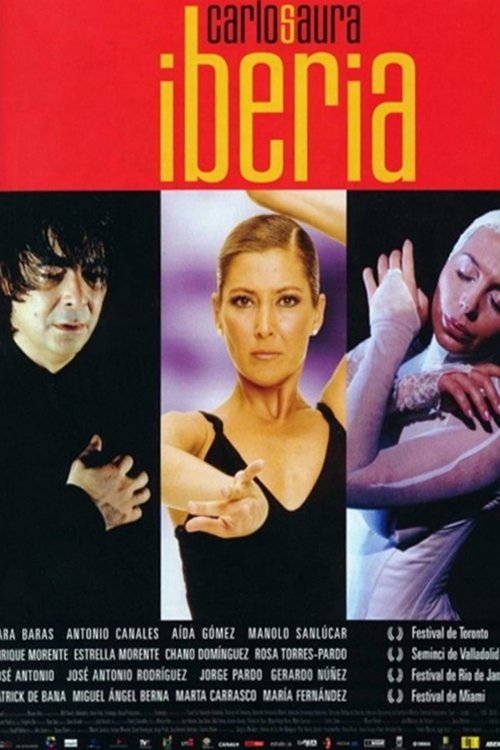
Iberia
2005
No user ratings available yet
Representation score: 6.4 out of 10

Representation Score
Fair
1952
ApprovedDirector
Edgar Neville
Runtime
110 minutes
Average Rating
No ratings yetNew Showbiz Analysis
Edgar Neville’s documentary serves as a vital cultural vessel that disrupts mid-century cinematic hierarchies. Its primary achievement is the centering of Romani artistic contributions and the technical mastery of its female leads. While the film remains bound by the social constraints of 1952, it avoids the homogeneous casting trends of the era. It opts for a nuanced celebration of specific ethnic and regional identities over standardized aesthetics. Ultimately, the work functions more as a preservation project than a subversive political statement. It succeeds by providing visibility to underrepresented cultural traditions through the lens of professional excellence.
Category Breakdown
The film focuses on traditional Spanish dance and lacks explicit LGBTQ+ narratives or non-cisgender identities, sticking to the straight-centered assumptions of 1950s ethnographic filmmaking.
Female dancers like Pilar Lopez and Maria Luz are prominently featured and given significant professional visibility. However, their roles align with traditional portrayals of passionate performers rather than challenging gender hierarchies.
The documentary highlights Romani contributions to Spanish culture. By focusing on Flamenco, it provides a platform for ethnic expression that was often sidelined in mid-century European cinema.
The film emphasizes a localized cultural identity through the concept of 'duende.' It favors a raw, visceral view of traditional social expressions over a sanitized, Westernized high-art aesthetic.
There is no documented evidence regarding the portrayal of physical or neurodivergent disabilities in this production.
Present on Screen
Limited or Absent
Official Synopsis
Title changed to "Flamenco" when it was first released in the USA in 1954, this is a program of Spanish songs and dances with the emphasis on "flamenco" or gypsy contributions. The USA version has an English narrative written by Walter Terry, the dance critic of the "New York Herald Tribune" newspaper. Heading the cast are Antonio (I), Pilar Lopez and Maria Luz, three of Spain's foremost dancers of the time, accompanied by members of the Ballet Espanol. Filmed in Cinefotocolor in which orange and blue dominated, a combination that should appeal to the fans of Auburn University athletic teams. Distributed in the USA by Martin J. Lewis.
2005
2011
1995
2016
2010
2017
1983
1905
No reviews yet. Be the first to share your thoughts on this movie!
Use the rating form above to leave a star rating and optional review.