Cab Calloway's Jitterbug Party
1935
No user ratings available yet
Representation score: 3.7 out of 10
Representation Score
Limited
1929
PassedDirector
Walter Graham
Average Rating
No ratings yetNew Showbiz Analysis
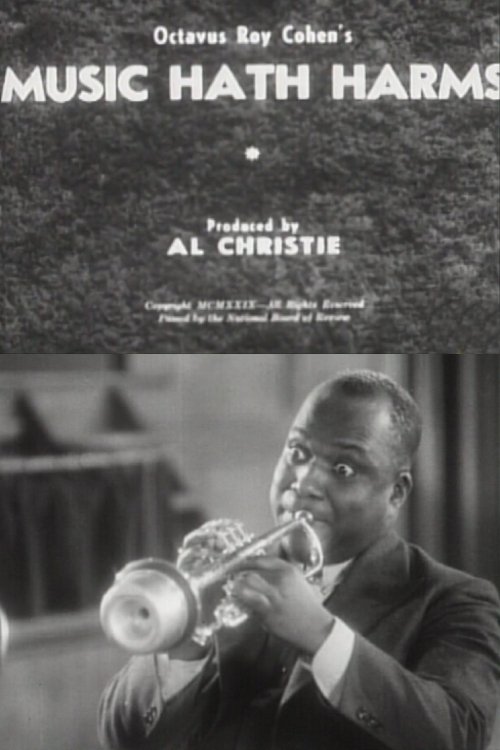
Music Hath Harms opens in the "Barbecue Lunch and Poolroom," a Harlem hub where the community’s social fabric is visible but ultimately serves as a stage for male performance. The film’s argument is simple: a man’s worth is tied to his ability to secure a romantic prize, even if he must fake the talent to do so. Roscoe Driggers, a con man who cannot play the cornet, schemes to pass off his friend’s music as his own to win $500 for his fiancée’s beauty shop. The camera loves Roscoe’s audacity, framing his deception as a charming hustle rather than a moral failing. The sold meaning is one of masculine competence through performance. Roscoe is the active agent, while Zenia is the passive recipient of his efforts, valued for her profession and as a symbol of domestic stability. The film’s internal logic supports this: the "real" musician is hidden under the stage, literally supporting the facade of the man in front. This reinforces a hierarchy where the visible man gets the credit, and the invisible labor is unacknowledged. The ending settles on the promise of the beauty shop, a traditional reward for the male protagonist’s successful con. The film does not challenge the traditional gender roles it depicts; it affirms them. The community is present, but the narrative arc is strictly individualistic and male-centric. The last image is one of romantic and financial success, achieved through deception, with no cost to the protagonist’s standing. It is a period piece that reflects the social norms of its time without subverting them.
Category Breakdown
No same-sex intimacy or gender non-conformity appears. The narrative focuses exclusively on heterosexual courtship and male musical rivalry within the 1929 Harlem setting.
Roberta Hyson plays Zenia, the manicurist fiancée whose beauty shop is the male protagonist’s goal. She serves as the romantic prize; competence and action belong to the men.
Set in Harlem with a predominantly Black cast, including Spencer Williams. It depicts Black community life and musical culture without white saviors or dominant white characters.
Local organizations like the Burying Society serve as neutral backdrops for a con. Traditional values like marriage are treated as standard goals, with no critique of these institutions.
No characters with physical, sensory, or cognitive disabilities are depicted. The protagonist’s musical inability is a skill deficit serving as the plot’s comedic engine, not a disability.
Present on Screen
Limited or Absent
Official Synopsis
In Harlem, Bud Peagler's "Barbecue Lunch and Poolroom" (the home of Brunswick Stew), also serves as the meeting place and hangout for many citizens and organizations such as 'The Sons and Daughters of The I Will Arise Society," and also Mosby's Blues Blowers. It is also where Roscoe Driggers hangs out. Roscoe claims to be the world's champion cornet player, although he can't play a note, even a sour one. But when the chance to earn $500 for playing his cornet at the big concert held by the "Over the River Burying Society" arises, Roscoe signs up. Roscoe needs $500 in order to buy a beauty shop for his manicurist-fiancée, Zenia Sprowl. Roscoe makes plans for his buddy Sam Ginn, who can play a cornet, to hide under the stage and play while Roscoe fakes it on the stage. But Sam gets taken out by some dudes who have a bone to pick with Roscoe. No sweat, though, as another of Roscoe's musician friends, Willie Trout, sees this and takes Sam's place under the stage....with his saxophone.
1935
1929

1936
1935
1936
1933
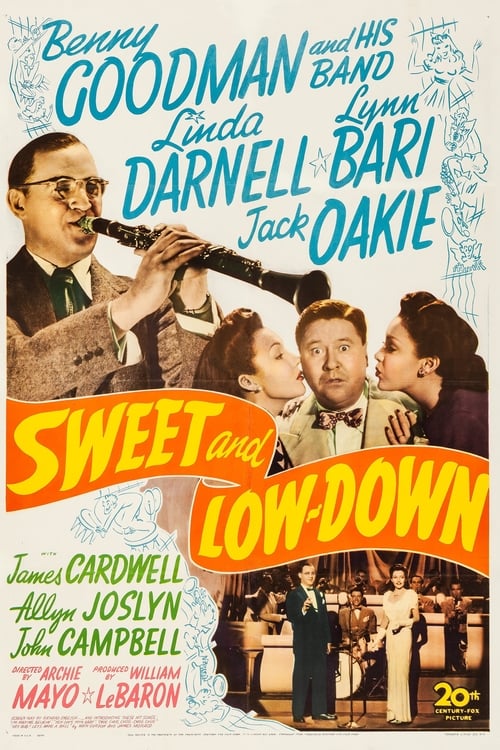
1944
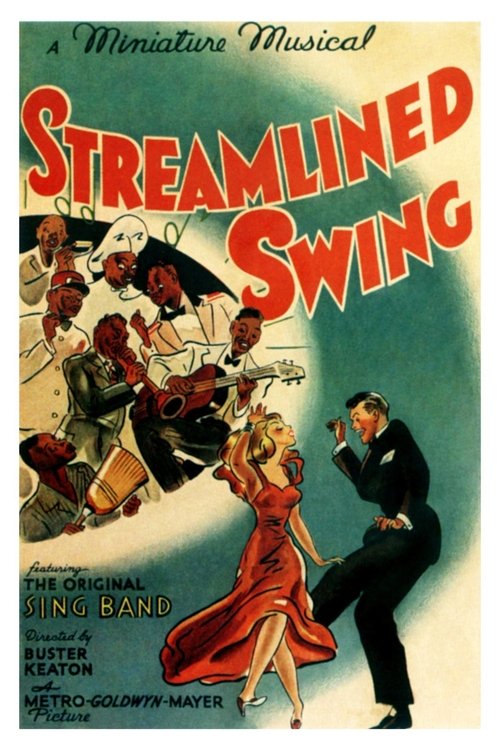
1938
No reviews yet. Be the first to share your thoughts on this movie!
Use the rating form above to leave a star rating and optional review.