
Welcome to Chechnya
2020
No user ratings available yet
Diversity score: 7.8 out of 10
2017
Director
David France
Runtime
105 minutes
Average Rating
No ratings yetSynopsis
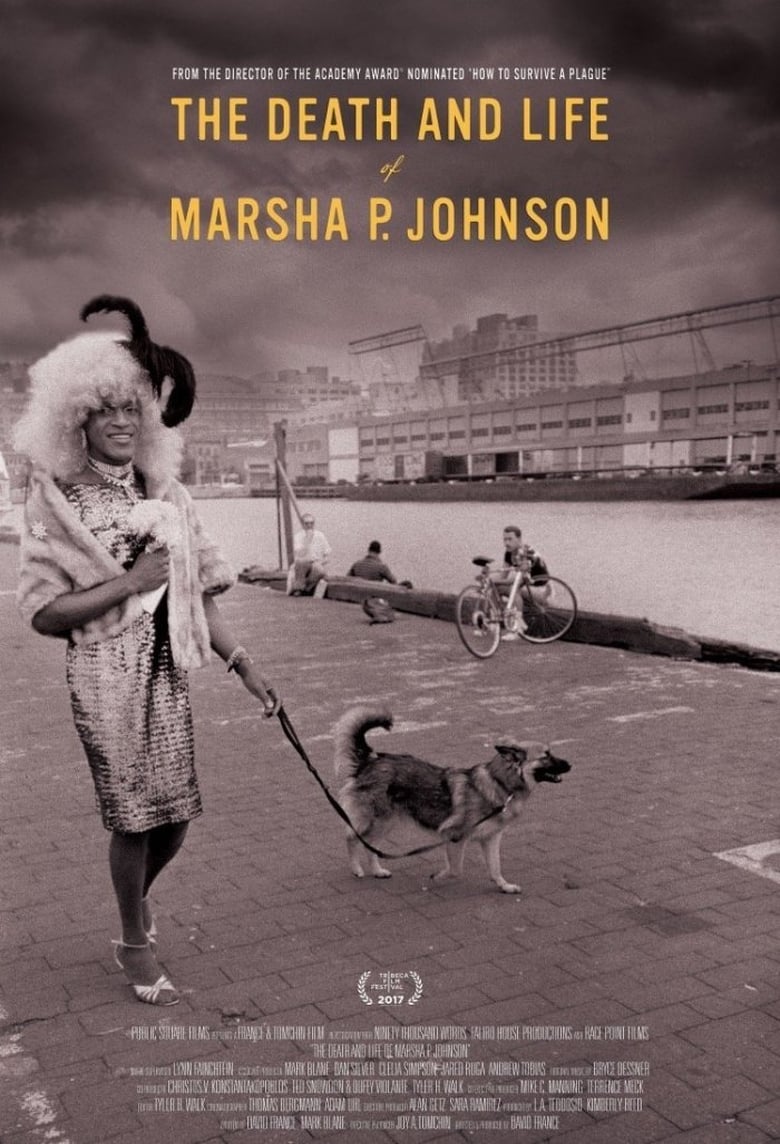
Describing herself as a 'street queen,' Johnson was a legendary fixture in New York City’s gay ghetto and a tireless voice for LGBT pride since the days of Stonewall, who along with fellow trans icon Sylvia Rivera, founded Street Transvestites Action Revolutionaries (S.T.A.R.), a trans activist group based in the heart of NYC’s Greenwich Village. Her death in 1992 was declared a suicide by the NYPD, but friends never accepted that version of events. Structured as a whodunit, with activist Victoria Cruz cast as detective and audience surrogate, The Death and Life of Marsha P. Johnson celebrates the lasting political legacy of Johnson, while seeking to finally solve the mystery of her unexplained death.
Overall Score
Excellent
Category Breakdown
LGBTQ+ Representation
The documentary centers on non-cisnormative and trans identities. It establishes Marsha P. Johnson and Sylvia Rivera as central architects of queer liberation, disrupting heteronormative historical frameworks.
Gender Representation
The film subverts gender hierarchies by documenting individuals who challenged the binary. It portrays gender affirmation as a central driver of political agency and leadership.
Racial & Ethnic Diversity
This work excels in intersectionality by examining the nexus of race and gender. It positions Black transgender women as leaders of social revolution rather than mere subjects.
Religious & Cultural Diversity
The narrative critiques Western institutions, portraying law enforcement as systemic aggressors. It highlights how capitalism and poverty impact marginalized populations through an identity-based lens.
Disability Representation
There is insufficient evidence to provide a score regarding specific physical or neurodivergent disabilities.
Strengths
Areas for Improvement
AI Analysis
David France’s documentary is a restorative project that reconstructs history through the eyes of those historically sidelined. By utilizing an investigative narrative, the film moves beyond simple biography to center the political agency of transgender women of color. The film succeeds by treating the lived experiences of its subjects as the primary historical record. It effectively challenges the reliability of state institutions, such as the NYPD, while highlighting the intersectional struggles of race, gender, and socioeconomic status. Ultimately, the work functions as a powerful critique of dominant social structures. It repositions marginalized figures from the periphery of history to the very center of the political narrative.
2020

2012

2016
1990

2014

2018

2016
2014

2021

2016

2020

2003
No reviews yet. Be the first to share your thoughts on this movie!
Use the rating form above to leave a star rating and optional review.