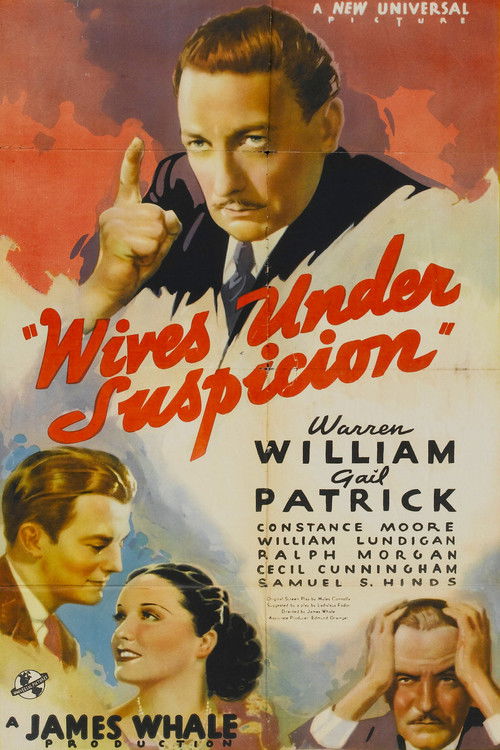
Wives Under Suspicion
1938
No user ratings available yet
Representation score: 0.4 out of 10
Representation Score
Minimal
1931
NRDirector
W.S. Van Dyke
Runtime
69 minutes
Average Rating
No ratings yetNew Showbiz Analysis
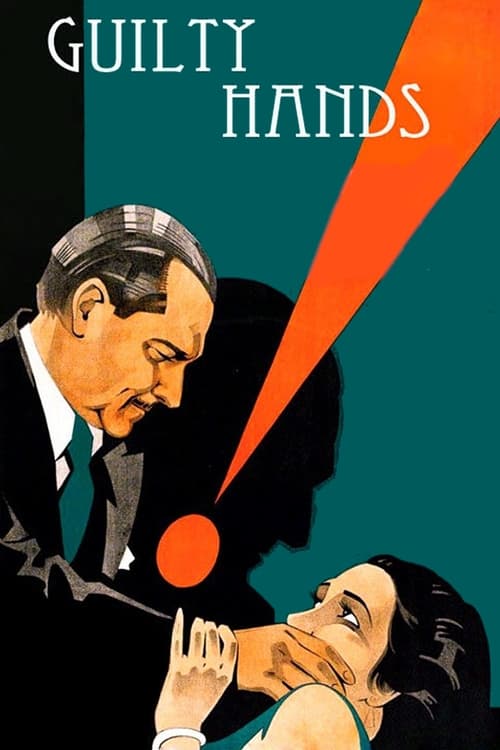
Guilty Hands is a traditional crime drama that adheres to the standard studio hierarchies of the early 1930s. The narrative focuses on a District Attorney's personal vendetta and his manipulation of the legal system, emphasizing individual criminality over broader social issues. The film relies on conventional archetypes, with male characters driving the central conflict. While there is a hint of non-straight relationships, the lack of explicit detail limits the representation of LGBTQ+ themes. Overall, the work lacks depth in exploring various aspects of diversity, focusing instead on individual moral failings and the machinations of a single character.
Category Breakdown
The film hints at non-straight relationships through a mention of a fiancé's lover, suggesting a potential exploration of queer themes. However, the depiction remains vague and lacks clear representation of LGBTQ+ identities.
The plot centers around male-driven conflict and ability to act. Female characters mostly act as catalysts for the District Attorney's actions rather than as independent protagonists.
The film follows traditional casting standards, featuring predominantly white actors. There is no evidence of diverse ethnic representation or challenges to Anglo-centric norms.
The story examines legal corruption through the lens of individual moral failures. It does not provide a broader critique of societal or cultural institutions.
There is no information available regarding the presence or portrayal of characters with physical or neurodivergent disabilities.
Present on Screen
Limited or Absent
Official Synopsis
A district attorney commits the perfect murder when he kills his daughter's womanizing fiancé and then tries framing the fiancé's lover.
1938
1939

1932

1930
1935
1950
1939
1940
No reviews yet. Be the first to share your thoughts on this movie!
Use the rating form above to leave a star rating and optional review.