
Hospitals: The White Mafia
1973
No user ratings available yet
Diversity score: 3.2 out of 10
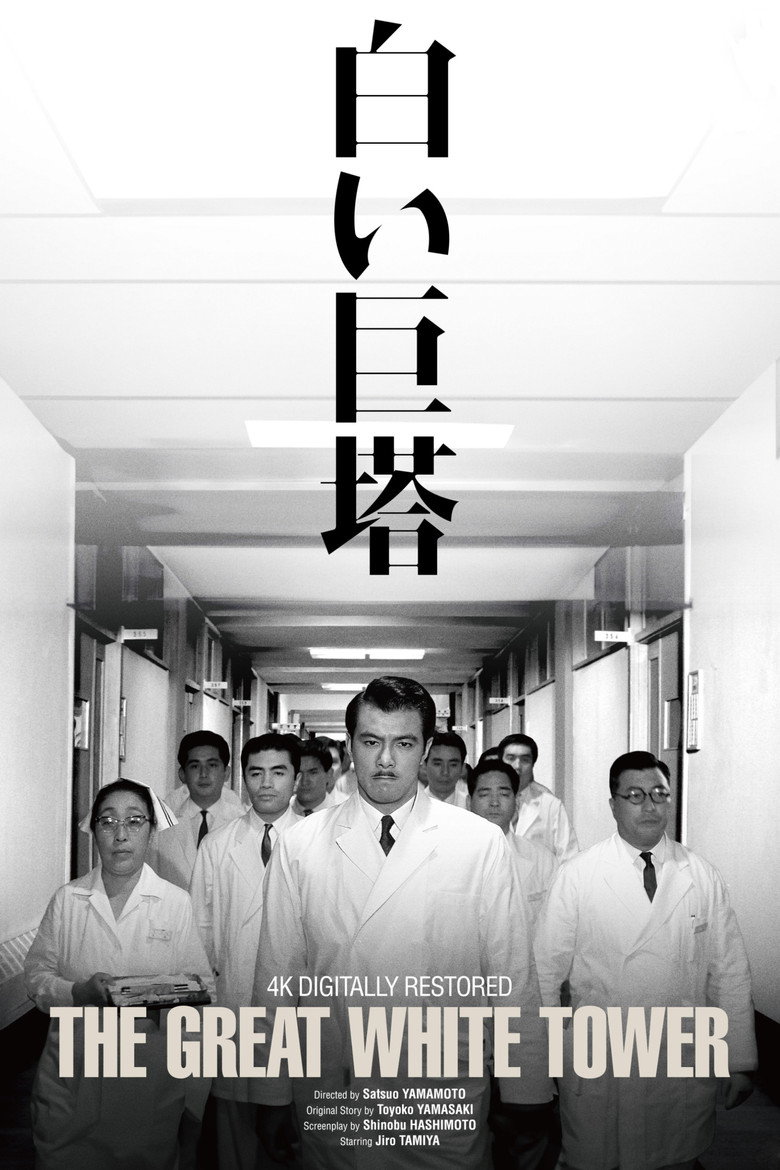
1966
Director
Satsuo Yamamoto
Runtime
150 minutes
Average Rating
No ratings yetSynopsis
The story contrasts the life of two doctors, former classmates and now both assistant professors at Naniwa University Hospital in Osaka. The brilliant and ambitious surgeon Goro Zaizen stops at nothing to rise to a position of eminence and authority, while the friendly Shuji Satomi busies himself with his patients and research.
Overall Score
Fair
Category Breakdown
LGBTQ+ Representation
The film focuses on masculine-coded surgical environments and professional rivalry. It operates within the traditional social constraints of 1960s Japan without exploring non-heteronormative identities.
Gender Representation
The narrative is driven by two male protagonists navigating a patriarchal hierarchy. It reinforces a traditional masculine sphere centered on competition for authority and intellectual dominance.
Racial & Ethnic Diversity
Set in a Japanese hospital, the film reflects the homogeneous social reality of the era. It adheres to historical demographic norms without intentional multicultural casting.
Religious & Cultural Diversity
The story offers a sophisticated critique of institutional corruption. It contrasts ruthless ambition against patient-centric ethics to challenge the moral integrity of medical hierarchies.
Disability Representation
The available information does not provide evidence regarding the portrayal of patients or staff with disabilities. Consequently, no specific representation can be confirmed.
Strengths
Areas for Improvement
AI Analysis
The film serves as a character study focused on the dichotomy of professional ethics and institutional ambition. It prioritizes a critique of systemic corruption within medical academia over demographic intersectionality. While the narrative lacks modern markers of gender and LGBTQ+ visibility, it provides a nuanced exploration of how individual ethics collide with systemic pressures. The strength of the work lies in its skepticism of authority. Ultimately, the film reflects the social and demographic realities of 1960s Osaka, functioning more as a social critique than a diverse character ensemble.
1973

2012
2004
1962

1962
1988

1949
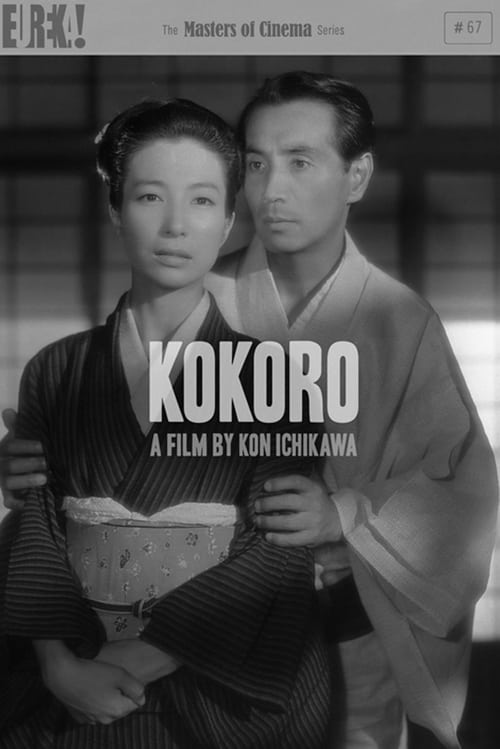
1955
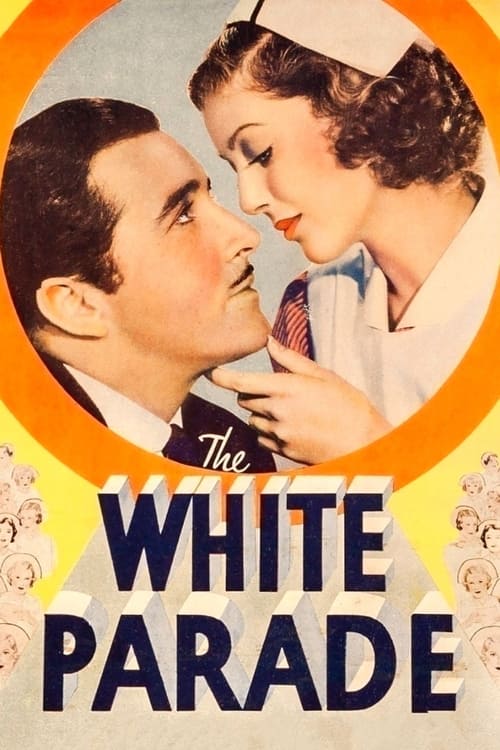
1934

1999

1972
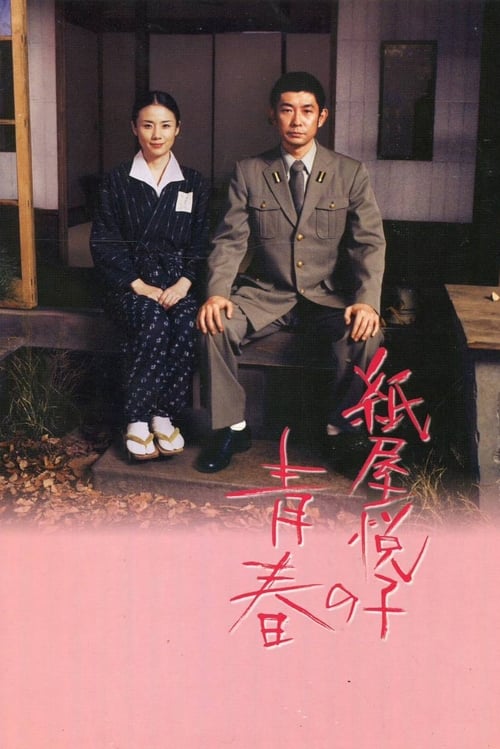
2006
No reviews yet. Be the first to share your thoughts on this movie!
Use the rating form above to leave a star rating and optional review.