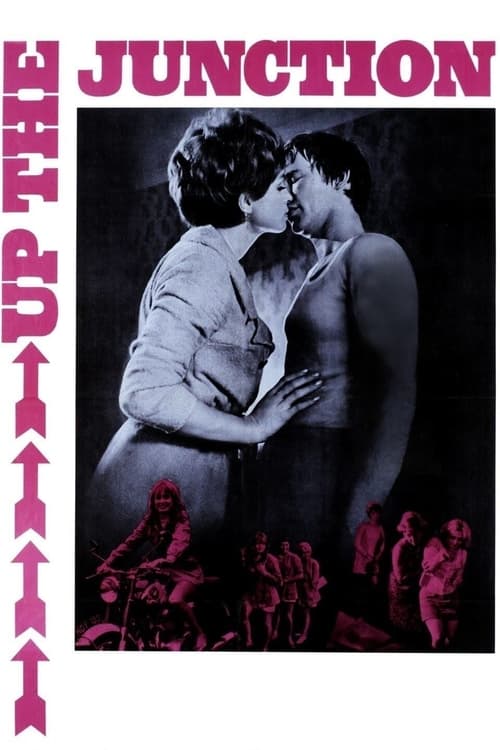
Up the Junction
1968
No user ratings available yet
Diversity score: 4.8 out of 10

1972
Director
Pantelis Voulgaris
Runtime
82 minutes
Average Rating
No ratings yetSynopsis
A lower-class maid navigates the social world of the upper-crust family she works for.
Overall Score
Fair
Category Breakdown
LGBTQ+ Representation
The film lacks explicit evidence of queer identities or non-cisnormative gender expressions. While social realist dramas often explore these themes, they are not present here.
Gender Representation
The narrative centers on a female protagonist navigating a male-dominated social hierarchy. This perspective challenges patriarchal structures by using a working-class woman as the primary lens for social interrogation.
Racial & Ethnic Diversity
The cast likely reflects the ethnic homogeneity of 1972 Greece. The film focuses on class-based 'othering' rather than multi-ethnic or diverse casting.
Religious & Cultural Diversity
The film provides a strong critique of traditional social institutions. It deconstructs class hierarchies by highlighting the friction between a lower-class individual and an upper-class family.
Disability Representation
There is no documented evidence regarding the portrayal of physical or neurodivergent disabilities in this work.
Strengths
Areas for Improvement
AI Analysis
Anna's Engagement is a social realist study of class stratification in 1972 Greece. It prioritizes the exploration of socioeconomic disparities and power imbalances over demographic variety. The film succeeds in centering a marginalized female voice to critique rigid social structures. However, it lacks representation for LGBTQ+ identities and ethnic diversity, reflecting its specific historical and regional context. Ultimately, the work's strength lies in its systemic critique of class rather than its breadth of identity representation.
1968

1972

1977
1972

1969
1974

1980

1996

1967

1972
1963

1971
No reviews yet. Be the first to share your thoughts on this movie!
Use the rating form above to leave a star rating and optional review.