
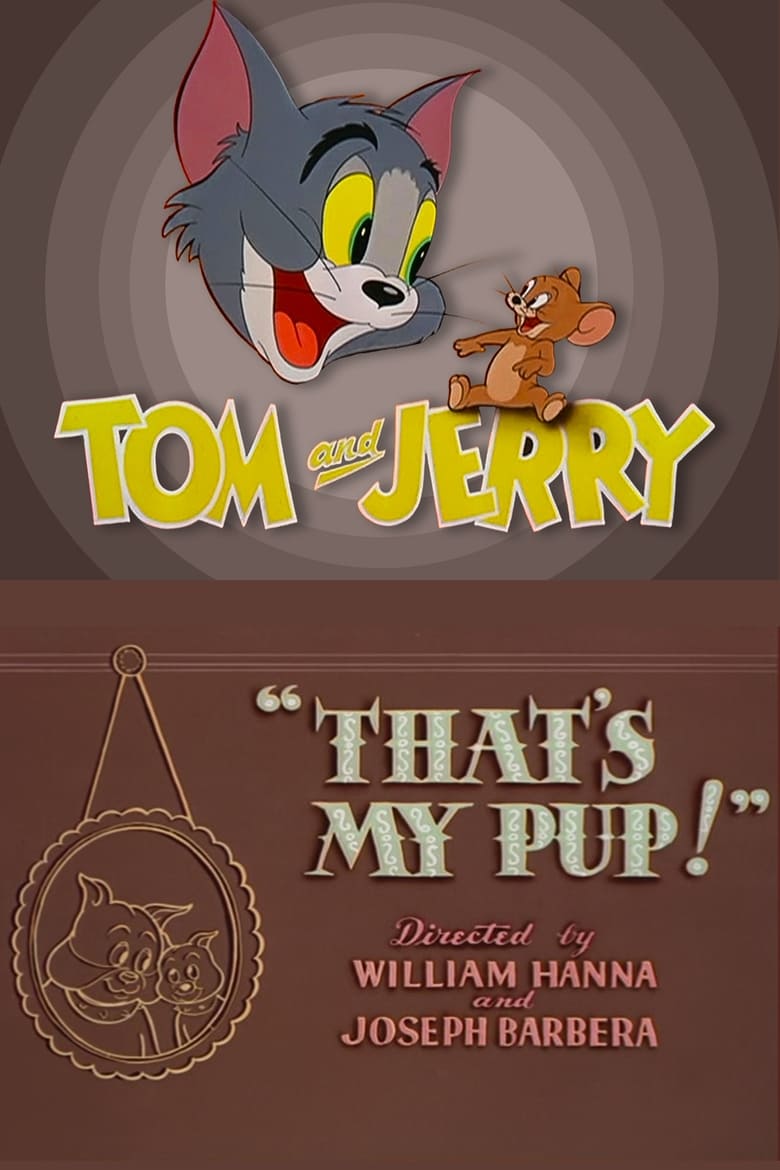
Puppy Tale
1954
No user ratings available yet
Diversity score: 2.0 out of 10
1953
NRDirector
William Hanna, Joseph Barbera
Runtime
7 minutes
Average Rating
No ratings yetSynopsis
Spike explains to his son the rules of being a dog: 1: be man's best friend (begging, lying at feet); 2: bury bones; 3: chase cats. Just then, Tom (and Jerry) run by, offering the perfect practice subject. Spike lectures Tom to be scared by the pup or else; Jerry overhears, and is soon doing his best dog impersonation, while Tom works on various strategies to neutralize Tyke
Overall Score
Minimal
Category Breakdown
LGBTQ+ Representation
The film focuses entirely on interspecies conflict and domestic animal behavior. There are no LGBTQ+ characters or explorations of non-cisnormative identities present.
Gender Representation
Spike reinforces traditional patriarchal structures by acting as an authoritative father figure. He provides strict rules and instruction to his offspring within a hierarchy of dominance.
Racial & Ethnic Diversity
The setting is a non-specific domestic environment populated by anthropomorphic animals. There is no evidence of racial or ethnic diversity within this species-based framework.
Religious & Cultural Diversity
The narrative operates within a traditional Western domestic framework emphasizing obedience to parental authority. It promotes a stable social order centered on domesticity and subservience.
Disability Representation
Characters function within standard physical parameters for slapstick animation. There are no depictions of visible or invisible disabilities or neurodivergence.
Strengths
Areas for Improvement
AI Analysis
This mid-century animation prioritizes high-velocity slapstick and physical comedy over identity-driven narratives. The story relies on the established cat-and-mouse dynamic to drive situational irony rather than social commentary. The film reinforces traditional hierarchies, specifically through the father-son dynamic between Spike and Tyke. This structure emphasizes obedience and the maintenance of established social roles within a domestic setting. Ultimately, the work functions as escapist entertainment that maintains the status quo. It lacks the complexity required for intersectional representation, focusing instead on kinetic energy and animal behavior.
1954
1953
1952
1956

1953
1951
1954
1955
1935
1966
1942
1962
No reviews yet. Be the first to share your thoughts on this movie!
Use the rating form above to leave a star rating and optional review.