Border Brigands
1935
No user ratings available yet
Representation score: 1.0 out of 10
Representation Score
Minimal
1935
ApprovedDirector
Bernard B. Ray
Runtime
60 minutes
Average Rating
No ratings yetNew Showbiz Analysis
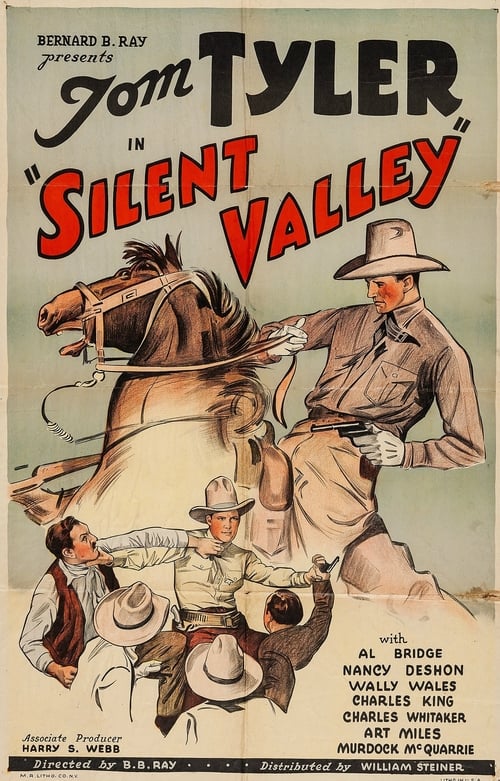
Silent Valley is a standard 1930s Western that adheres strictly to the genre clichés of its era. The narrative centers on a male sheriff navigating a conflict involving a gang of rustlers and his own fiancée, prioritizing traditional law-and-order themes over social complexity. The film lacks intentionality in disrupting social hierarchies. Instead, it reinforces the period's conventional gender roles and homogeneous casting, offering a predictable moral binary between institutional stability and criminality. Ultimately, the work functions as a period-typical genre piece. It provides little in the way of multi-layered character arcs or diverse representation, focusing instead on established clichés of romance and frontier justice.
Category Breakdown
The film focuses on a traditional romance between a sheriff and his fiancée. There is no indication of queer subtext or non-cisgender identities.
The story is driven by a male protagonist through action and conflict. The fiancée serves as an emotional catalyst but remains a passive participant in the narrative.
The film appears to reflect the homogeneous casting practices typical of 1930s Westerns. There is no evidence of diverse ensemble dynamics or race-bent casting.
The story utilizes a classic Western framework centered on law and order. It reinforces traditional values of justice and social cohesion rather than critiquing them.
There is no information regarding the inclusion of characters with physical or neurodivergent disabilities.
Present on Screen
Limited or Absent
Official Synopsis
A sheriff tracking a gang of rustlers discovers that one of them is the brother of his fiance.
1935
1935
1938

1932

1953
1937
1939
1935
No reviews yet. Be the first to share your thoughts on this movie!
Use the rating form above to leave a star rating and optional review.