Find another title
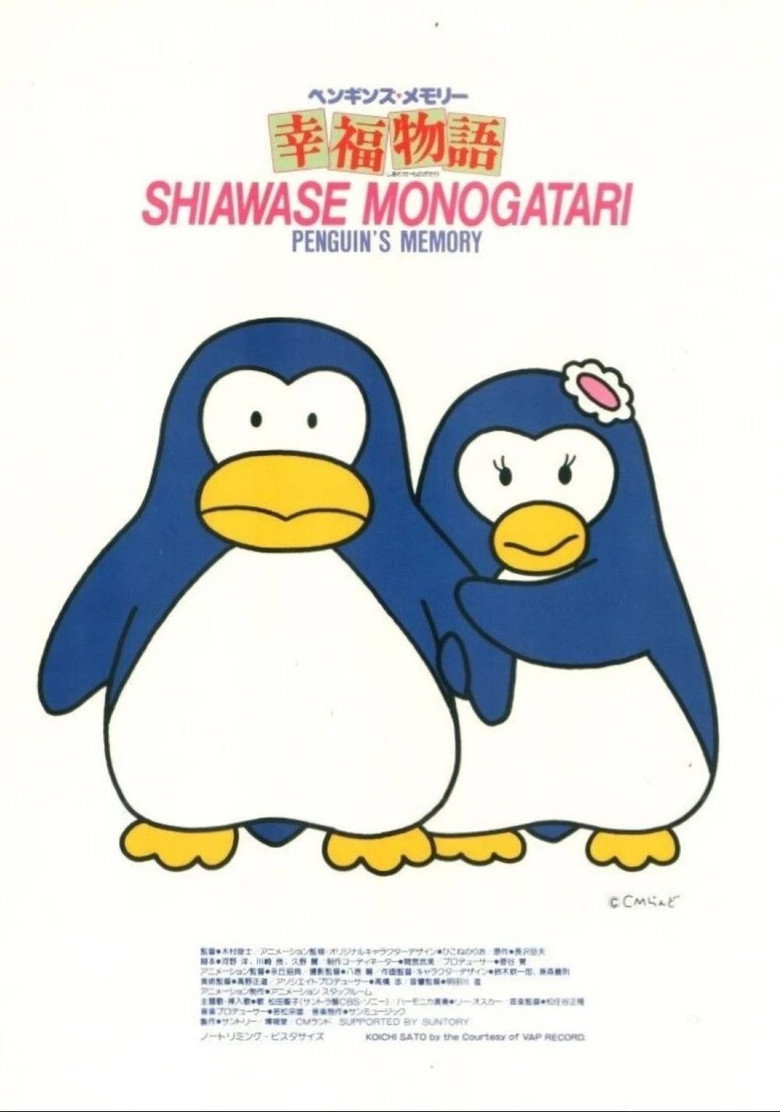
Penguin's Memory: A Tale of Happiness
1985
Director
Shunji Kimura
Runtime
102 minutes
Average Rating
No ratings yetSynopsis
Mike is a penguin soldier who returns home after being injured during combat. Estranged from his family and friends, he leaves his hometown and starts to roam adrift through the country.
Where to Watch
Diversity & Representation
Overall Score
Fair
Category Breakdown
LGBTQ+ Representation
The narrative lacks any evidence of non-cisnormative identities or same-sex intimacy. The story focuses primarily on the protagonist's estrangement from his existing social circle.
Gender Representation
The story centers on a singular male protagonist. While it doesn't explicitly reinforce hierarchies, it engages with traditional masculine archetypes through the lens of an injured soldier.
Racial & Ethnic Diversity
Using penguins as characters allows the film to move away from human-centric racial dynamics. This species-based metaphor potentially transcends specific ethnic boundaries through its anthropomorphic approach.
Religious & Cultural Diversity
The film critiques traditional social stability by portraying the hometown and family as sites of alienation. It subverts the 'hero's return' trope by focusing on the protagonist's disconnection.
Disability Representation
The protagonist's identity is shaped by his status as an injured combatant. The narrative explores the lived experience of trauma and the search for meaning outside traditional structures.
Strengths
- Deconstructs traditional war hero tropes by focusing on post-conflict alienation.
- Uses anthropomorphic characters to explore themes of displacement and social friction.
- Provides a meaningful exploration of physical and psychological trauma through the protagonist.
Areas for Improvement
- Lacks explicit representation of LGBTQ+ identities or non-cisnormative characters.
- The narrative focus is heavily centered on a singular male perspective.
- Limited visibility regarding specific ethnic or intersectional diversity markers.
AI Analysis
The film offers a nuanced look at post-conflict trauma by deconstructing the typical 'war hero' narrative. Instead of a triumphant return, it explores the alienation and displacement felt by a soldier unable to reintegrate into his community. While the anthropomorphic setting provides a unique metaphorical layer that bypasses human racial dynamics, the film lacks explicit intersectional identifiers. The focus remains heavily on the individual's struggle against societal and familial expectations. Ultimately, the work succeeds in highlighting the systemic failure of social institutions to support individuals after violence, though it remains limited by a lack of diverse identity representation.
Rate this Movie
Reviews
No reviews yet. Be the first to share your thoughts on this movie!
Use the rating form above to leave a star rating and optional review.