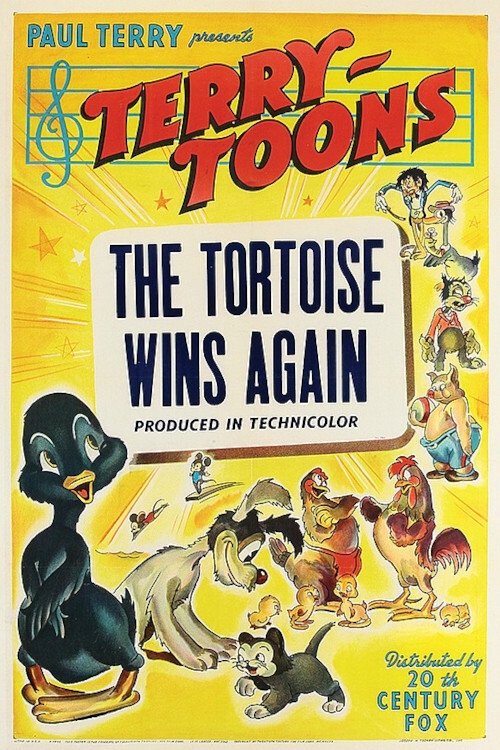
The Tortoise Wins Again
1946
No user ratings available yet
Representation score: 1.1 out of 10

Representation Score
Minimal
1924
Director
Sanae Yamamoto
Runtime
6 minutes
Average Rating
No ratings yetNew Showbiz Analysis
Sanae Yamamoto’s 1924 animation marks a significant achievement in early Japanese cinema. However, it remains rooted in the rigid moralism of its source material. As a retelling of an Aesop Fable, the film emphasizes didactic lessons over character-driven social exploration. The narrative relies on universalized animal archetypes to convey moral lessons. This approach avoids modern multi-layered frameworks, focusing instead on the structural implications of a classical Western fable within a silent-era medium. Ultimately, the work preserves traditional morality. It lacks the complexity needed to address contemporary social hierarchies, gender roles, or diverse lived experiences.
Category Breakdown
The film centers on a competitive race between two animals. There are no characters with non-conforming gender identities or critiques of the assumption that everyone is straight.
The characters are anthropomorphic animals that avoid human gender roles. However, the story lacks complex character development, relying on simple, non-gendered animal archetypes.
The film uses universalized animal characters to tell a Western fable. It does not highlight or explore racial or ethnic diversity.
The film follows a traditional moral framework emphasizing perseverance over arrogance. It adheres to classical Western storytelling without challenging modern cultural norms.
The physical differences between the tortoise and the hare represent personality traits rather than disabilities. The film does not explore neurodivergence or disability issues.
Present on Screen
Limited or Absent
Official Synopsis
A retelling of the classic Aesop Fable, The Tortoise and the Hare.
1946
1926
1935
1956
1936
1931
1965
2008
No reviews yet. Be the first to share your thoughts on this movie!
Use the rating form above to leave a star rating and optional review.