
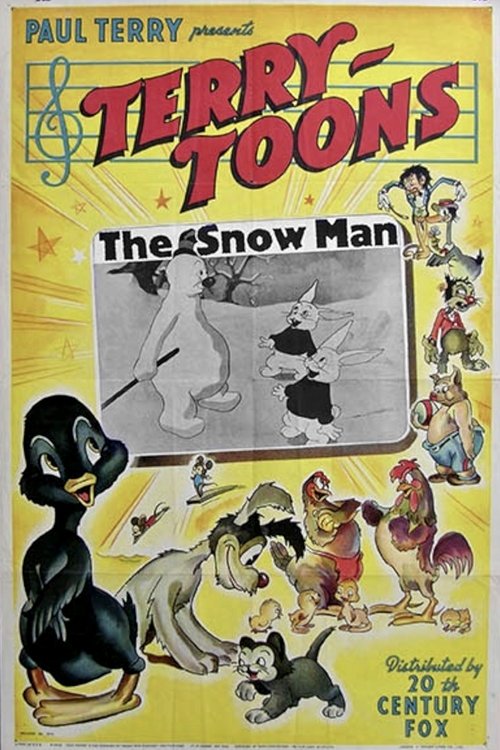
The Snow Man
1946
No user ratings available yet
Diversity score: 2.2 out of 10
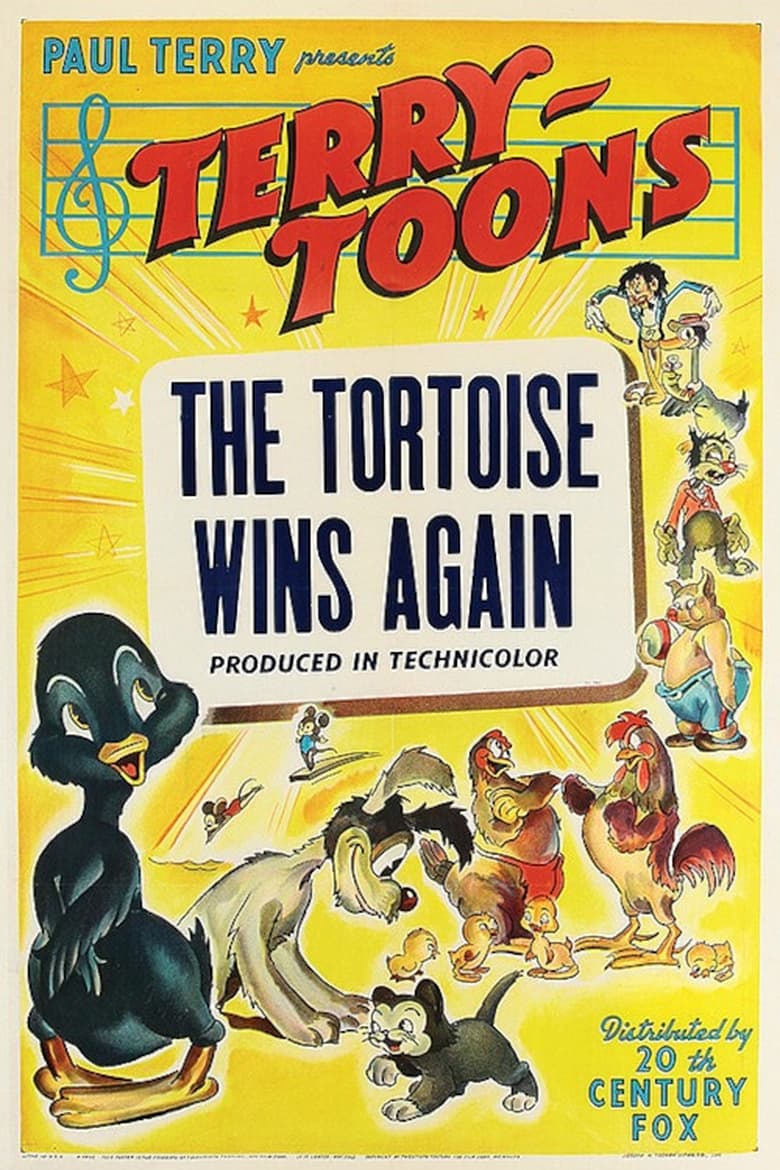
1946
ApprovedDirector
Connie Rasinski
Runtime
7 minutes
Average Rating
No ratings yetSynopsis
In one of the great (hooray!)spoiler titles of all time, this version of the Hare vs. Tortoise fable finds the contest being done on ice skates between teams of rabbits and turtles, and the turtles cheat like crazy...and, since the title tells all, I suppose it's okay to mention the plodders win again.
Overall Score
Minimal
Category Breakdown
LGBTQ+ Representation
The film centers on a competitive rivalry between male-coded animal archetypes. It operates within a strictly heteronormative framework, lacking any engagement with queer themes or non-cisnormative identities.
Gender Representation
The narrative focuses exclusively on masculine-coded competition between rabbits and turtles. It lacks a significant female presence, making it impossible to engage with gender-based power dynamics.
Racial & Ethnic Diversity
The cast consists of anthropomorphic animals in a generic setting. The film lacks any attempt at race-bending or the inclusion of diverse ethnic perspectives, remaining culturally homogeneous.
Religious & Cultural Diversity
The story reinforces a singular, conventional morality centered on Western values of perseverance. It functions as a reinforcement of established social order rather than a critique of it.
Disability Representation
There is no depiction of neurodivergence, physical disability, or chronic illness. Physical attributes are used strictly for slapstick comedy rather than meaningful representation.
Strengths
Areas for Improvement
AI Analysis
The Tortoise Wins Again is a traditionalist piece of mid-century animation that prioritizes slapstick comedy over social commentary. The narrative structure relies on a classic fable to reinforce established social orders and conventional Western values. Because the film focuses on a competitive race between male-coded animals, it lacks the breadth to include diverse gender, racial, or LGBTQ+ perspectives. The world-building is homogeneous and adheres to the standardized formulas of the 1940s. Ultimately, the film serves as a reinforcement of traditional tropes. It lacks the intentionality required to disrupt social hierarchies or provide representation for marginalized groups.
1946
1955
1950
1955
1928
1945
1957
1940
1947
1947
1950
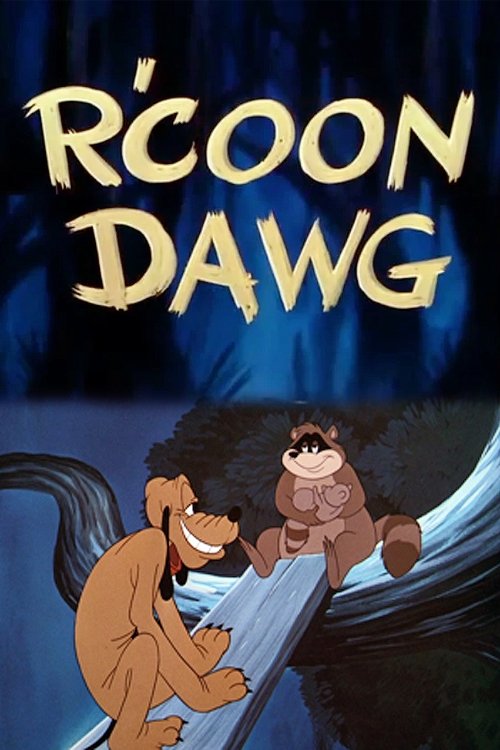
1951
No reviews yet. Be the first to share your thoughts on this movie!
Use the rating form above to leave a star rating and optional review.