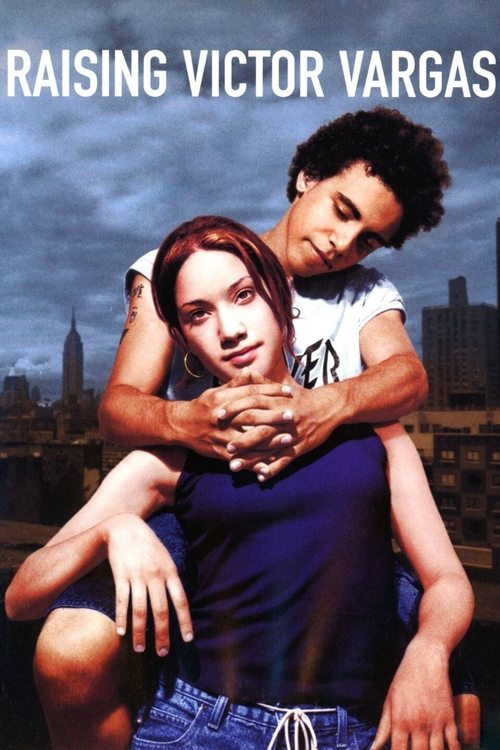
Raising Victor Vargas
2003
No user ratings available yet
Representation score: 4.0 out of 10

Representation Score
Limited
2000
RDirector
Raymond De Felitta
Runtime
104 minutes
Average Rating
No ratings yetNew Showbiz Analysis
Two Family House is a localized character study that emphasizes the friction of specific ethnic and class-based identities. It provides a gritty, realistic look at working-class Brooklyn subcultures without sanitizing the subject matter. However, the film operates within a narrow demographic scope, relying heavily on traditional structures and lacking LGBTQ+ representation or broader multi-layered diversity. Ultimately, while the film avoids glorifying stability by highlighting personal dysfunction, it remains a conventional production regarding demographic breadth and social representation.
Category Breakdown
The film does not feature any LGBTQ+ characters or non-cisgender identities. Relationships and interpersonal dynamics are centered around heterosexual and traditional marriage structures.
Female characters such as Estelle and Mary play significant roles in the plot, though their influence is often defined by their relationships to men. The film portrays the domestic sphere as a place of tension and conflict rather than stability.
The story focuses on Italian-American and Irish-American working-class communities in Brooklyn. While it highlights specific cultural elements, it lacks broader multi-layered diversity or perspectives outside Anglo-Saxon backgrounds.
The narrative explores the pressures of economic hardship on traditional institutions like the nuclear family. Parenthood is shown through the lens of sudden responsibility and burden rather than idealized domesticity.
There is no significant representation of visible or invisible disabilities. Alcoholism is portrayed as a character flaw or social obstacle rather than an exploration of disability.
Present on Screen
Limited or Absent
Official Synopsis
Buddy Visalo (Michael Rispoli) is a factory worker, a frustrated crooner who once had a shot at the big time. Buddy's dreams of greatness have been reduced to an endless series of failed moneymaking schemes. His latest is buying a two-family house for him and his wife, Estelle (Katherine Narducci) and converting the ground floor into a neighborhood bar where he can perform. The wrench in the works is that he also inherits the upstairs tenants, Mary,a pregnant Irish girl fresh off the boat (Kelly Macdonald) and her abusive, alcoholic husband, Jim (Kevin Conway). As Buddy's gang of Italians tries to handle the situation, the girl goes into labor, and a baby is born, forcing them all to confront the limits of their tolerance and compassion.
2003
1995
2001
2000
1997
1998
1994

1999
No reviews yet. Be the first to share your thoughts on this movie!
Use the rating form above to leave a star rating and optional review.