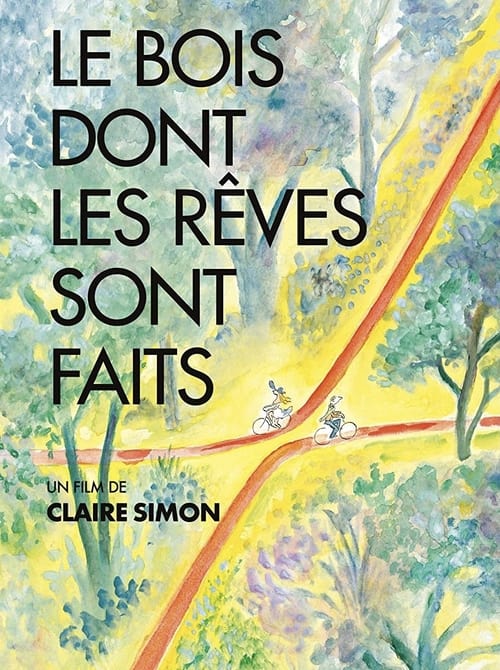
The Woods Dreams Are Made of
2016
No user ratings available yet
Representation score: 8.3 out of 10

Representation Score
Good
2022
TV-PGDirector
Elza Gauja
Runtime
70 minutes
Average Rating
No ratings yetNew Showbiz Analysis
Meanwhile in Lucavsala serves as a sociological study that challenges traditional urban hierarchies. It avoids a sanitized depiction of city life, opting instead for a complex tapestry of social outliers. The film's strength lies in its ability to place displaced individuals and unconventional dreamers on the same narrative plane as the professional class. This approach disrupts standard socio-economic expectations. Ultimately, the work celebrates non-institutionalized spaces. It frames the allotment garden as a necessary counter-narrative to the rigid, air-conditioned structures of modern urban planning.
Category Breakdown
The film explores alternative lifestyles through its portrayal of flower children and spiritual festival organizers. These subcultures suggest a departure from traditional social norms, even though specific identities are not defined.
The documentary focuses on a communal social portrait rather than traditional hierarchies. It avoids the usual urban narratives of professional roles but does not explicitly show specific gender power shifts.
Diversity is shown mainly through class and social roles within a Riga neighborhood. The film highlights socio-economic tensions but does not emphasize specific racial or ethnic differences.
The film criticizes rigid urban structures by celebrating organic human expression. It portrays the green oasis as a vital site for spiritual festivals and unconventional communal living.
By including homeless populations, the film provides a platform for underrepresented groups often left out of urban narratives. It focuses on those living on the fringes of social stability.
Present on Screen
Limited or Absent
Official Synopsis
A colorful and slightly comical portrait of a group of people and a snapshot of an era, telling the story of Lucavsala, a green oasis in the center of Riga. Unique in Europe, this allotment garden colony, located almost in the city center, brings together a wide variety of social groups: modern flower children, city dwellers caught up in their daily routines, organizers of spiritual festivals, homeless people, and pyromaniacs, whom the director contrasts with urban planners working in air-conditioned offices. Each of them strives to realize their dreams on the island, which are as contrasting as the characters in the film themselves.
2016
2000
2020
2000
2002

2017

2018

2017
No reviews yet. Be the first to share your thoughts on this movie!
Use the rating form above to leave a star rating and optional review.