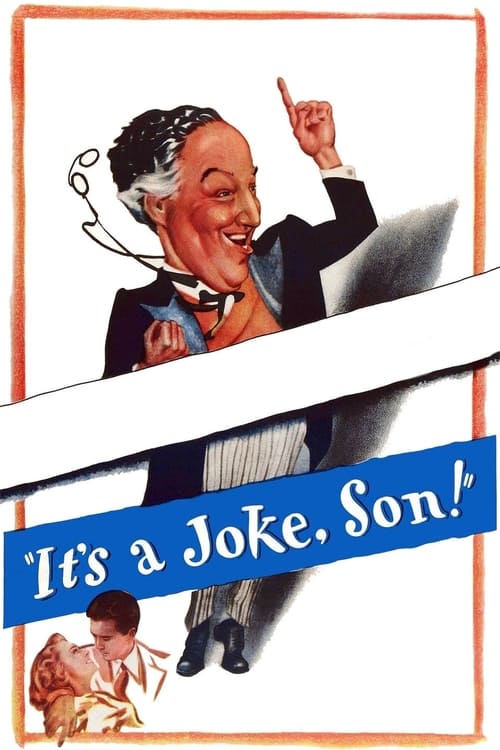
It's a Joke, Son!
1947
No user ratings available yet
Representation score: 0.6 out of 10

Representation Score
Limited
1949
ApprovedDirector
Richard Haydn
Runtime
88 minutes
Average Rating
No ratings yetNew Showbiz Analysis
Dear Wife is a mid-century domestic comedy that closely follows the social norms of its time. The plot centers on a political campaign that causes tension within a single family, focusing on the relationships between Bill, Ruth, and Judge Wilkins. The film lacks depth in representing diverse identities, including LGBTQ+ characters, racial backgrounds, or individuals with disabilities. It functions as a traditional comedy of errors that reinforces established social and familial structures. Ultimately, the film offers a snapshot of 1949's conventional storytelling, emphasizing domestic stability and a homogeneous social environment over more progressive or diverse perspectives.
Category Breakdown
The film does not include any representation of LGBTQ+ identities or same-sex relationships. The story revolves around heterosexual marriages and families.
Miriam plays a key role in driving the plot, but the main tension arises from the relationship between Ruth and Bill. Women's influence seems confined to the home rather than having a broader impact.
The story focuses on a local political struggle involving a single community, and there is no indication of a diverse cast. It appears to depict a society where everyone looks similar.
The film examines political ambition versus institutional power through the lens of a single family. It upholds traditional social structures without challenging Western institutions.
There are no characters with visible or invisible disabilities in the narrative.
Present on Screen
Limited or Absent
Official Synopsis
In this sequel to Dear Ruth, teenaged Miriam starts a political campaign to nominate Bill Seacroft, her brother-in-law, for state senator in opposition to the local political machine. Unknown to Miriam, said machine nominates her father, Judge Wilkins. As support grows for Bill, the presence of rival candidates under one roof poses problems, especially for Ruth, wife to Bill and daughter of the judge.
1947

1953
1942
1942

1937

1972
1949

1940
No reviews yet. Be the first to share your thoughts on this movie!
Use the rating form above to leave a star rating and optional review.