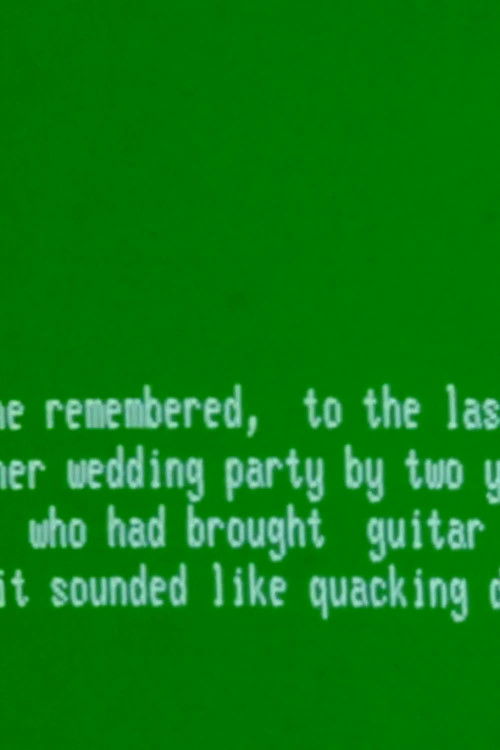
Gloria!
1979
No user ratings available yet
Representation score: 3.6 out of 10
No Poster Available
Representation Score
Fair
2015
Director
Ross Sutherland
Runtime
63 minutes
Average Rating
No ratings yetNew Showbiz Analysis
Ross Sutherland’s experimental documentary critiques media consumption by rebuilding fragments of old films and TV shows. The work challenges the stability of historical archives and the repetitive cycles of traditional broadcasting. The film lacks explicit, character-driven action for specific identity groups, which limits its scores in identity-specific categories. Instead, it focuses on the symbolic implications of its non-linear structure and the themes of memory and mortality. Ultimately, the film's strength lies in its structural disruption of conventional media. It uses the 'rerun' to highlight the exclusionary nature of historical records rather than providing direct representation.
Category Breakdown
The film's LGBTQ presence comes from the found footage it uses. While it doesn't center LGBTQ stories, its deconstruction of older media suggests a subtle critique of traditional representation.
By removing vintage media fragments from their original context, the film disrupts traditional gender roles. However, the lack of character-driven action prevents a higher score.
The documentary uses archival fragments that historically lack diversity or rely on clichés. The film highlights the erasure of diverse voices without acting as a corrective casting project.
The narrative prioritizes temporal instability and the fallibility of memory. This approach critiques singular historical narratives in favor of a more fluid, decentralized view of cultural heritage.
The experimental, found-footage nature of the work provides insufficient evidence to evaluate the portrayal of disability or neurodivergence.
Present on Screen
Limited or Absent
Official Synopsis
Poet Ross Sutherland takes fragments of old films and TV shows and rebuilds them into an audiovisual meditation on memory, death and reruns.
1979
1978
2016

1983
2002
2003
2021

2020
No reviews yet. Be the first to share your thoughts on this movie!
Use the rating form above to leave a star rating and optional review.