Mort à Vignole
1998
No user ratings available yet
Representation score: 4.0 out of 10
Representation Score
Limited
1979
Director
Hollis Frampton
Runtime
10 minutes
Average Rating
No ratings yetNew Showbiz Analysis
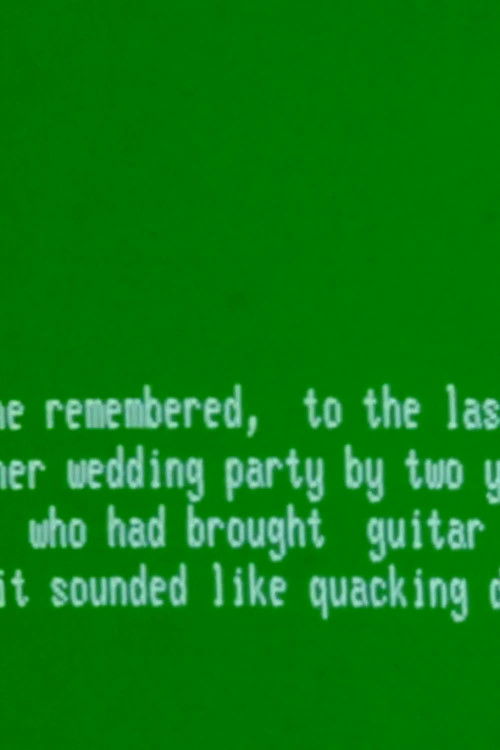
Hollis Frampton’s *Gloria!* operates as a formalist experiment rather than a character-driven narrative. Because it relies on still photography and text, it avoids traditional social representation metrics in favor of structural disruption. The film achieves moderate inclusion by focusing on the female subject and using a diverse photographic montage. This approach avoids including someone from a minority group without giving them real depth by presenting a non-homogeneous visual field without the constraints of a cohesive cast. Ultimately, the work functions as a philosophical inquiry into memory and death. It succeeds in challenging male-dominated storytelling hierarchies through its meditative, gender-focused aesthetic and secular, postmodern lens.
Category Breakdown
Since it is a non-narrative, structuralist work, the film does not include character dialogue or romantic arcs. There are no clear depictions of LGBTQ+ identities or critiques of the assumption that everyone is straight or cisgender.
The film focuses on the female face through a series of portraits. This shifts the viewer's attention to a contemplative study of women, breaking away from traditional male-dominated storytelling structures.
A variety of faces appear in the photographic montage. Although these subjects do not have much influence over the story, the visual presentation suggests a broad, non-uniform human tapestry.
The work emphasizes personal experience and memory over specific religious teachings. It leans towards secularism and intellectual ideas, avoiding traditional Western religious narratives.
There are no specific depictions of visible or invisible disabilities used as central themes or plot devices.
Present on Screen
Limited or Absent
Official Synopsis
In GLORIA! Frampton juxtaposes nineteenth-century concerns with contemporary forms through the interfacing of a work of early cinema with a videographic display of textual material. These two formal components (the film and the texts) in turn relate to a nineteenth-century figure, Frampton's maternal grandmother, and to a twentieth-century one, her grandson (filmmaker Frampton himself). In attempting to recapture their relationship, GLORIA! becomes a somewhat comic, often touching meditation on death, on memory and on the power of image, music and text to resurrect the past.
1998
1983
2015
1978
2001
2008
2002

2020
No reviews yet. Be the first to share your thoughts on this movie!
Use the rating form above to leave a star rating and optional review.