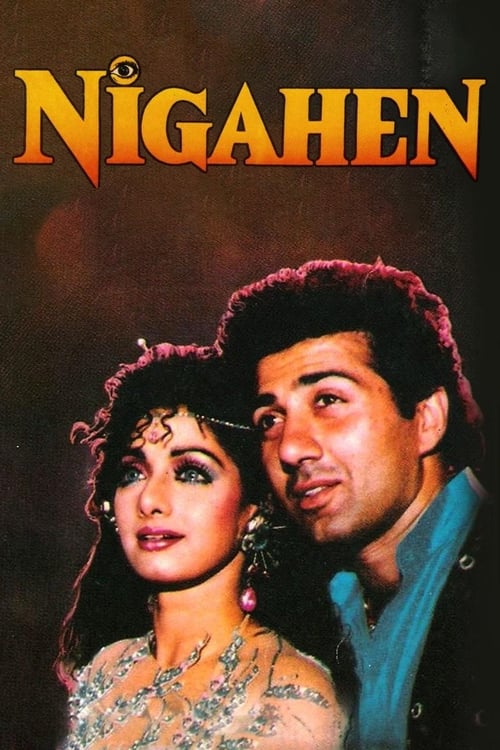
Nigahen: Nagina Part II
1989
No user ratings available yet
Representation score: 1.8 out of 10
Representation Score
Fair
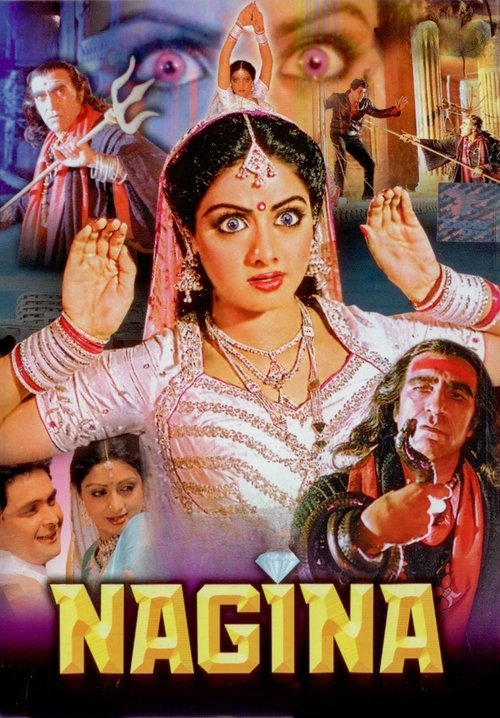
1986
Not RatedDirector
Harmesh Malhotra
Runtime
138 minutes
Average Rating
No ratings yetNew Showbiz Analysis
Nagina stands out for its subversion of gendered roles, placing a formidable female protagonist at the center of a supernatural revenge plot. Rajni moves beyond the role of a mere romantic interest to become a powerful force of justice. However, the film remains firmly anchored in traditional social and religious structures. The narrative relies on heterosexual romance and conventional Hindu mythological archetypes, offering little room for diverse social perspectives. Ultimately, the film prioritizes mythic storytelling over contemporary social diversity, making it a culturally specific experience.
Category Breakdown
The film follows a strictly heterosexual romantic structure. There is no presence of same-sex intimacy or non-cisgender identities.
Rajni subverts traditional female passivity by serving as the story's primary driver. She transitions from a romantic interest to a powerful, shape-shifting entity, granting her significant strength and ability to act.
The cast presents a culturally homogeneous Indian identity typical of 1980s Bollywood. It does not attempt to diversify the ethnic landscape or engage in multi-ethnic casting.
The narrative is deeply embedded in Hindu mythological motifs and spiritual frameworks. It reinforces traditional religious concepts rather than offering a secular or postmodern critique.
No significant focus is placed on physical or neurodivergent disabilities. The protagonist's shape-shifting is treated as mythological empowerment rather than a representation of disability.
Present on Screen
Limited or Absent
Official Synopsis
The story follows Rajni, a shape-shifting cobra (Ichchadhari Naagin) who marries a civilian, Rajiv, to avenge the death of her spouse at the hands of an evil saint. Rajiv, who comes from a wealthy family, returns to India after studying in London. His mother wants him to marry Vijaya Singh, but he falls in love with Rajni, an orphan. His mother initially opposes the marriage but later agrees. Their happiness is disrupted when Bhairon Nath, a sadhu with the ability to control snakes, arrives and reveals that Rajni is actually a Naagin seeking revenge. Bhairon Nath has his own sinister motives—he wants to capture Rajni because she knows the location of a hidden Mani, a sacred jewel that would grant him immense power. A dramatic battle ensues, leading to Bhairon Nath’s defeat, and Rajiv and Rajni live happily ever after.
1989

1993
1990
2005
1976
1979
1990
1992
No reviews yet. Be the first to share your thoughts on this movie!
Use the rating form above to leave a star rating and optional review.