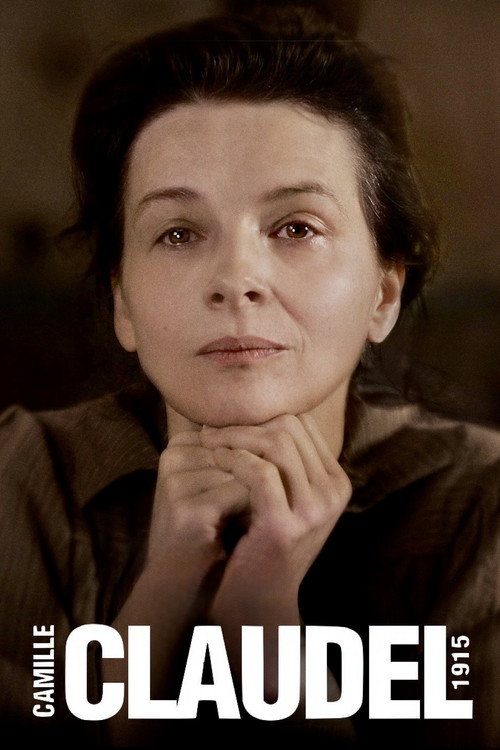
Camille Claudel 1915
2013
No user ratings available yet
Representation score: 7.0 out of 10

Representation Score
Good
1975
Director
Liliane de Kermadec
Runtime
115 minutes
Average Rating
No ratings yetNew Showbiz Analysis
Aloïse is a sophisticated character study that finds its strength in the nuanced portrayal of neurodivergence. By centering on the protagonist's artistic expression, the film grants her a significant role in driving the story. It avoids superficial clichés, instead offering a grim, honest look at historical psychiatric failures. However, the film is limited by its specific historical and geographic setting. The focus on turn-of-the-century Switzerland results in a lack of racial and ethnic diversity. Additionally, the narrative does not explore LGBTQ+ identities, focusing instead on social alienation. Ultimately, the film succeeds as a critique of oppressive historical medical and psychiatric institutions. It uses a female perspective to challenge the authority of the medical establishment, making it a powerful study of individual ability to act.
Category Breakdown
The film focuses on the protagonist's psychological descent and isolation. There is no explicit evidence of queer identity or non-straight relationships within the narrative.
The story centers on a female protagonist's intellectual and creative struggles. It portrays her musicality and internal world as resistance against a male-dominated medical establishment.
Set in turn-of-the-century Switzerland, the film operates within a historically homogeneous European context. There is no evidence of a diverse or non-Anglo-Saxon cast.
The narrative critiques traditional Western medical and psychiatric institutions as barbaric. It prioritizes the protagonist's subjective reality over clinical or religious dogma.
The film explores neurodivergence as a lived experience through the protagonist's haunting drawings. It highlights the systemic failure to understand non-normative cognitive states.
Present on Screen
Limited or Absent
Official Synopsis
Aloise creates a series of haunting drawings while she is incarcerated in an institution for the insane in turn-of-the-century Switzerland. She endures torments as a musically gifted girl and later as a young woman; her developing madness and the barbaric treatments of the time are shown.
2013
1970
2012
2021
1982
1945
1967

2023
No reviews yet. Be the first to share your thoughts on this movie!
Use the rating form above to leave a star rating and optional review.