
Boris Godounov
1989
No user ratings available yet
Diversity score: 3.8 out of 10
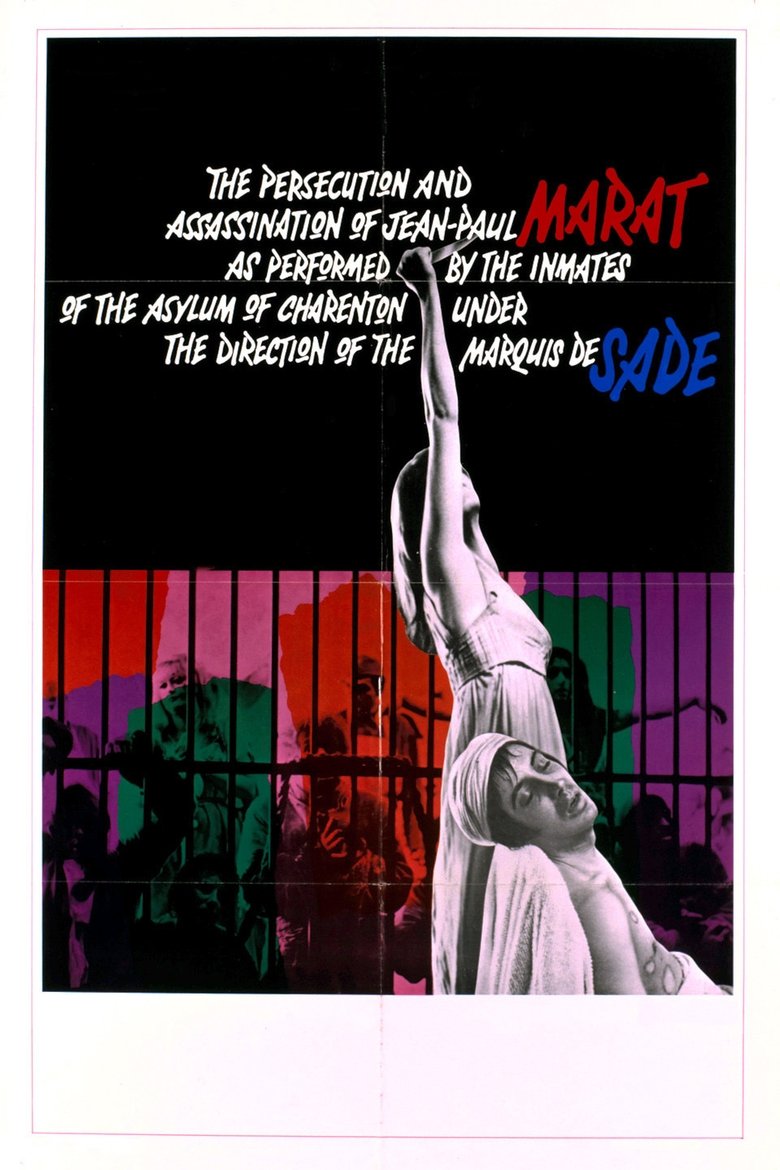
1967
NRDirector
Peter Brook
Runtime
116 minutes
Average Rating
No ratings yetSynopsis
In Charenton Asylum, the Marquis de Sade directs a play about Jean Paul Marat's death, using the patients as actors. Based on 'The Persecution and Assassination of Jean-Paul Marat as Performed by the Inmates of the Asylum of Charenton Under the Direction of the Marquis de Sade', a 1963 play by Peter Weiss.
Overall Score
Fair
Category Breakdown
LGBTQ+ Representation
The Marquis de Sade serves as a disruption to traditional sexual morality and heteronormative constraints. While the film lacks explicit depictions of same-sex intimacy, it explores the tension between institutional repression and sexual autonomy.
Gender Representation
The film operates within historical French Revolutionary power dynamics but disrupts traditional hierarchies through character agency. It prioritizes psychological volatility over standard masculine stability or domestic patriarchal archetypes.
Racial & Ethnic Diversity
The production features a homogeneous white cast reflecting its period-specific European setting. This lack of racial diversity aligns with the historical context of the 1967 production and the French asylum setting.
Religious & Cultural Diversity
The narrative offers a profound critique of Western institutional power and state-sanctioned violence. It portrays the French Revolution as a fragmented, subjective experience rather than a singular moral crusade.
Disability Representation
Characters with mental illness and neurodivergence are granted immense agency as the primary drivers of the action. The film avoids pity, instead presenting disability as a site of intense political struggle.
Strengths
Areas for Improvement
AI Analysis
Peter Brook’s film is a radical deconstruction of social and theatrical hierarchies. It excels by centering neurodivergent characters as active agents of rebellion rather than passive objects of pity. The film's strength lies in its aggressive critique of Western institutional authority and systemic power. However, the work remains limited by its historical homogeneity. The cast lacks racial diversity, and the narrative does not overtly subvert gender roles through a modern lens. It relies on historical frameworks that reflect the era's constraints. Ultimately, the film's impact comes from its intellectual subversion. It uses the chaos of the asylum to challenge established social norms and explore the fragmentation of truth during political upheaval.
No reviews yet. Be the first to share your thoughts on this movie!
Use the rating form above to leave a star rating and optional review.