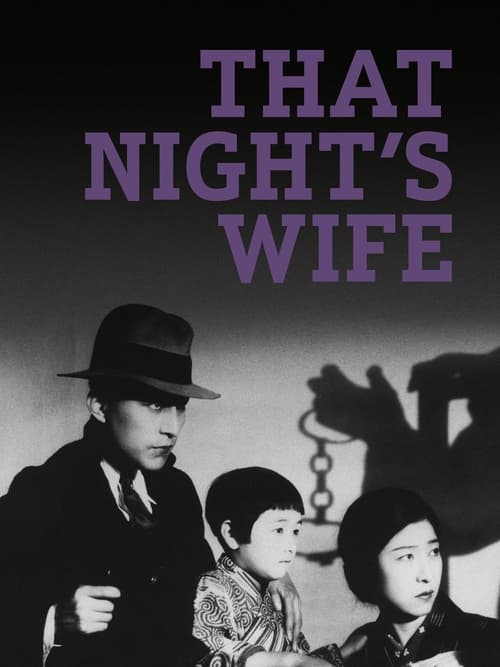
That Night's Wife
1930
No user ratings available yet
Representation score: 6.2 out of 10

Representation Score
Fair
1933
Director
Tomu Uchida
Runtime
121 minutes
Average Rating
No ratings yetNew Showbiz Analysis
Police Officer (1933) serves as a study of social friction rather than a diverse ensemble piece. Its strength lies in its departure from Western cinematic norms and its exploration of complex, situational ethics through the lens of a rekindled friendship between an officer and a criminal. However, the film remains limited by a narrow demographic focus. The narrative is built almost entirely around male-centric dynamics, which restricts the exploration of gender diversity and identity. While it offers a valuable non-Western perspective, it operates within a structurally traditional framework regarding social roles.
Category Breakdown
The film does not explicitly depict LGBTQ+ identities. While there is a strong bond between the policeman and the gangster, it does not confirm any non-straight relationships.
The story focuses heavily on male-centric dynamics, emphasizing the relationship between two men. This focus leaves little room for female characters or challenging gender hierarchies.
As a Japanese production, the film provides a non-Western perspective that challenges Anglo-Saxon cinematic norms. It offers a localized look at social order and crime within its specific cultural context.
The story explores moral relativism by blurring the lines between law and criminality. It centers a friendship between an officer and a gangster, critiquing rigid legalistic morality.
There is no evidence of characters with visible or invisible disabilities within the provided narrative details.
Present on Screen
Limited or Absent
Official Synopsis
Itami, a young policeman, meets his high school friend, Tetsuo, a gangster, at a roadblock. As they rekindled their friendship, a complex relationship is established between them.
1930

1952
1999

1949

1978

1938

1960
1955
No reviews yet. Be the first to share your thoughts on this movie!
Use the rating form above to leave a star rating and optional review.