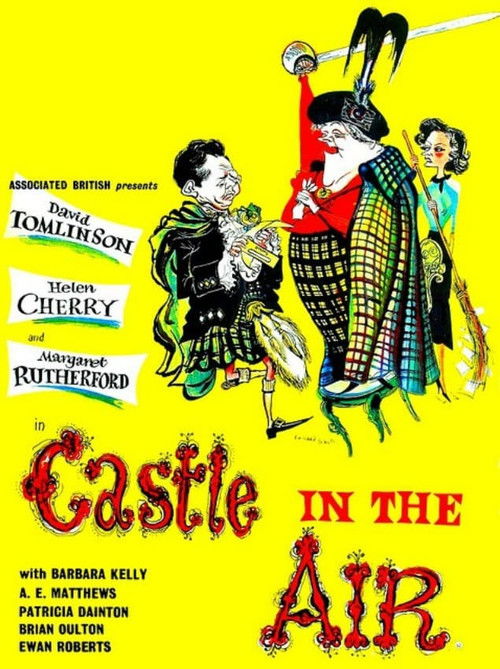
Castle in the Air
1952
No user ratings available yet
Representation score: 2.0 out of 10

Representation Score
Minimal
1954
NRDirector
Mario Zampi
Runtime
88 minutes
Average Rating
No ratings yetNew Showbiz Analysis
Happy Ever After is a conventional mid-century comedy that adheres strictly to the social and demographic norms of 1954. The narrative centers on localized class conflict and traditional character archetypes within a South Irish village setting. The film lacks multi-layered complexity or systemic subversion. Instead, it relies on established formulas of inheritance, local scheming, and supernatural folklore to drive its plot. Ultimately, the work functions as a period piece that reflects the homogeneous and patriarchal cultural frameworks of its era.
Category Breakdown
The film does not depict any non-straight relationships or same-sex intimacy. The narrative revolves around traditional social scheming within a mid-century context.
Serena McGluskey demonstrates significant influence as a schemer, but the plot is primarily driven by male figures. The story upholds patriarchal structures related to estate ownership and leadership roles.
The setting in South Ireland implies a homogeneous ethnic makeup. There is no indication of racial diversity or non-Celtic identities in the main storyline.
The film incorporates Irish folklore and local village hierarchies as key narrative elements. It operates within traditional Western social structures concerning inheritance and land ownership.
There are no visible or invisible disabilities mentioned or central to the character arcs in this comedy.
Present on Screen
Limited or Absent
Official Synopsis
The whole village mourns when General O'Leary, owner of a hunting estate in South Ireland, is killed in an accident. His nephew, Jasper O'Leary, takes over the state and soon has aroused the displeasure of all, with the exception of Serena McGluskey, as much a schemer as he is a cad. Led by Thady O'Heggarty, the villagers plot to drive Jasper away. They use the occasion of "O'Leary Night", when the ghost of the first O'Leary walks the halls, to create general chaos.
1952
1938

1951
1937
1940
1953
1952
1966
No reviews yet. Be the first to share your thoughts on this movie!
Use the rating form above to leave a star rating and optional review.