Press for Time
1966
No user ratings available yet
Representation score: 2.2 out of 10
Representation Score
Minimal
1952
ApprovedDirector
Lewis Gilbert
Runtime
82 minutes
Average Rating
No ratings yetNew Showbiz Analysis
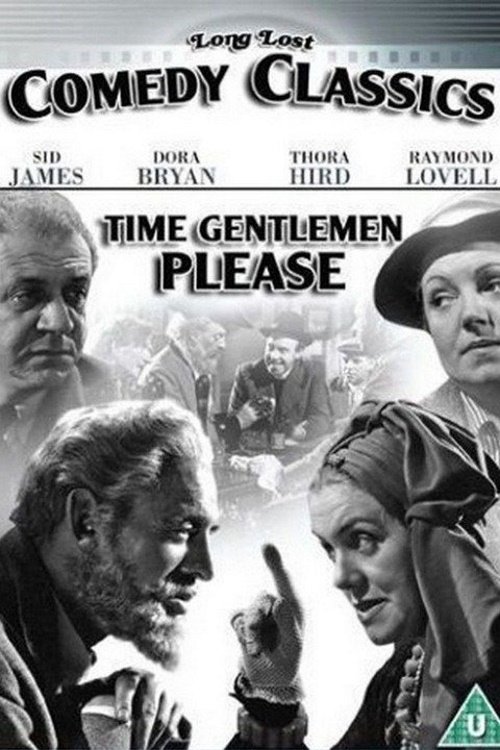
Time, Gentlemen, Please! is a period-specific social comedy that upholds mid-century British hierarchies rather than challenging them. The narrative relies on established norms regarding gender, race, and class to create comedic tension. The film's focus is on local governance and the clash between a rebellious individual and rigid communal rules. However, it serves as a light-hearted exploration of social order rather than a critical examination of societal structures. Ultimately, the work presents a homogeneous depiction of rural life, lacking representation for LGBTQ+ identities, diverse ethnicities, or characters with disabilities.
Category Breakdown
The film focuses on a traditional, male-centric social structure with no representation of LGBTQ+ identities. It does not challenge assumptions about gender and sexuality.
Men dominate the social sphere, driving the central conflict. Women have minor roles that reflect domestic expectations typical of 1950s Britain.
The cast is ethnically uniform, reflecting the lack of multicultural integration in a rural English village during this time. No diverse character types are present.
The plot centers around traditional Western institutions like the Village Council and the Church. While humorous, the story upholds local social customs and community unity.
There are no prominent depictions of characters with physical or neurodivergent disabilities. Disability is not used as a central theme or tool for character development.
Present on Screen
Limited or Absent
Official Synopsis
Because of its high productivity and "almost" 100 per cent employment, the town of Hayhoe, England is expecting a visit from the Prime Minister. The "almost" is because of Dan Dance (Eddie Byrne), an old rogue who would rather drink and philosophize than work. The Village Council are determined to have a perfect record so they connive to have the old man put into the alms-house which has been unoccupied for many years, where he must abide by rules laid down 400 years ago. A new Vicar arrives and discovers that, because of the circumstances created by the Council, Dan Dance is entitled to 6,000 pounds a year at the expense of the village.
1966

1949

1954

1953
1943

1970

1957
1959
No reviews yet. Be the first to share your thoughts on this movie!
Use the rating form above to leave a star rating and optional review.