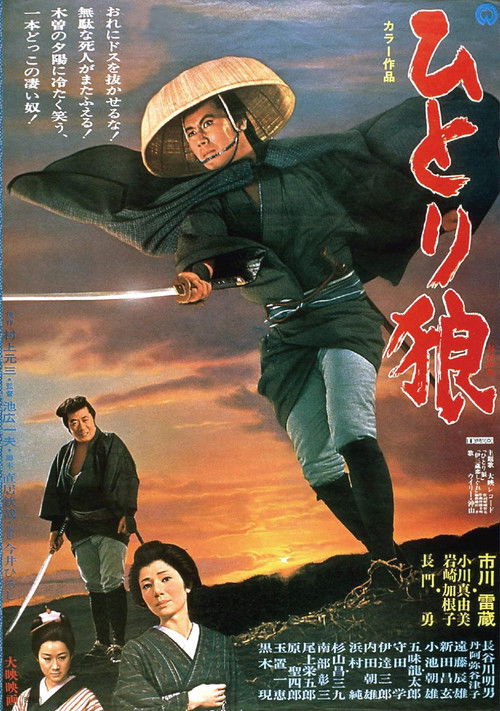
Lone Wolf Isazo
1968
No user ratings available yet
Representation score: 4.8 out of 10
Representation Score
Fair
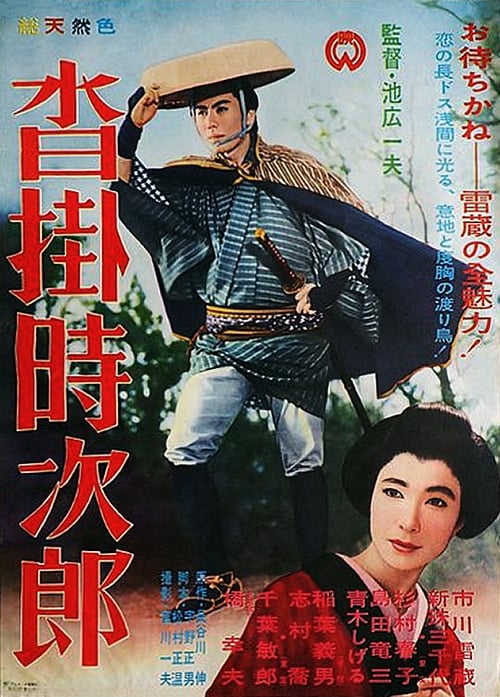
1961
Director
Kazuo Ikehiro
Runtime
87 minutes
Average Rating
No ratings yetNew Showbiz Analysis
This character-driven drama examines the tension between personal conscience and societal obligations. Although it adheres to the demographic and gender norms of its time, it offers a nuanced exploration of individual morality against oppressive social codes. However, it remains confined to the social and gender norms of 1961, lacking diverse representation beyond its primary Japanese cast and traditional family units.
Category Breakdown
The film does not include explicit LGBTQ+ characters or non-straight relationships. It focuses on traditional family structures typical of 1961 Japan.
The female character is portrayed in a traditional, dependent role, while the male protagonist's strength lies in his protective and caring nature rather than combat or dominance.
The cast is made up of actors of Japanese ethnicity, reflecting the period setting. The story focuses on internal social dynamics without addressing racial norms.
The film questions the morality of organized crime by presenting the yakuza code as ethically problematic. It emphasizes individual ethics and compassion over rigid social hierarchies.
The film does not depict any characters with physical or cognitive disabilities.
Present on Screen
Limited or Absent
Official Synopsis
One of Japan's most popular stories is the tale of Kutsukake Tokijiro, a traveling gambler who finds that he must take care of the wife and child of a yakuza he had been forced by the code of the gamblers to fight man to man. In a brilliant performance from super-star Ichikawa Raizo, with strong support from two of the greats from Toho, Shimura Takashi (7 Samurai) and Aratama Michiyo (Sword of Doom) the heartfelt story reaches new heights. Tokijiro, having learned the true nature of the boss to whom he was obligated for having spent a night and eaten at the gang's headquarters takes up arms against them in a running battle fought across the back roads of the entire nation. Another powerful rendition of this superb story, it is not to be missed!
1968
1962

1966

1964
1959
1963

1968
1962
No reviews yet. Be the first to share your thoughts on this movie!
Use the rating form above to leave a star rating and optional review.