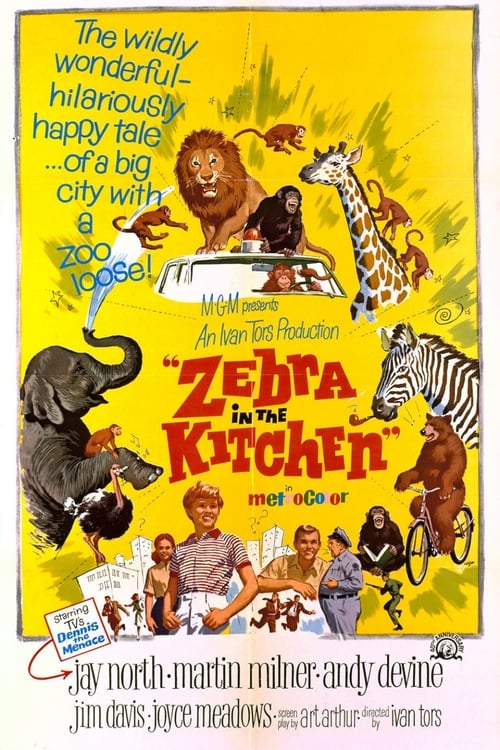
Zebra in the Kitchen
1965
No user ratings available yet
Representation score: 0.8 out of 10

Representation Score
Fair
1961
Director
Vladimir Fetin
Runtime
84 minutes
Average Rating
No ratings yetNew Showbiz Analysis
Striped Trip is a comedic subversion of authority that finds its strength in gender dynamics. By removing the Captain's competence, the film allows a female lead to emerge as the main driver of the plot, challenging traditional ideas of masculine leadership. However, the film's diversity is limited by its era and focus. While it offers a progressive take on gendered power, it lacks specific representation of LGBTQ+ identities or explicit racial diversity, staying within the bounds of a standard Soviet ensemble comedy. Ultimately, the film's impact comes from its critique of stability. It uses an anarchic premise to dismantle hierarchies, even if it does not offer a broad range of multi-layered identities.
Category Breakdown
The film does not include any explicit references to LGBTQ+ characters or non-straight relationships. The narrative centers on the chaotic interactions between humans and animals.
The film challenges traditional patriarchal structures by showing the Captain abandoning his responsibilities. Marianna, a strong female character, steps up to fill the power gap with her intelligence and leadership.
The film reflects the multi-ethnic composition typical of the Soviet era, although specific details about ethnic makeup are not provided. The focus is on professional and class dynamics.
The story critiques formal authority and organized structures by disrupting the ship's social order. It emphasizes individual capability over established, fragile institutions.
There is no evidence of characters with physical or neurodivergent disabilities within the narrative or historical context.
Present on Screen
Limited or Absent
Official Synopsis
A Soviet cruise ship "Evgeni Onegin" is carrying cages with tigers and lions for a Soviet Circus. One loose monkey unlocks all cages, letting the tigers and lions out. Poor passengers and crew have no place to run. The captain abandons his post out of fear, and the monkey takes over the captain's post. The ship gets under total control by the tigers and lions. Only one lady is standing up to the challenge. Her name is Marianna, she loves animals, and she takes the situation under control.
1965
1966
1949
1979

1954
1970

1993
1962
No reviews yet. Be the first to share your thoughts on this movie!
Use the rating form above to leave a star rating and optional review.