Find another title
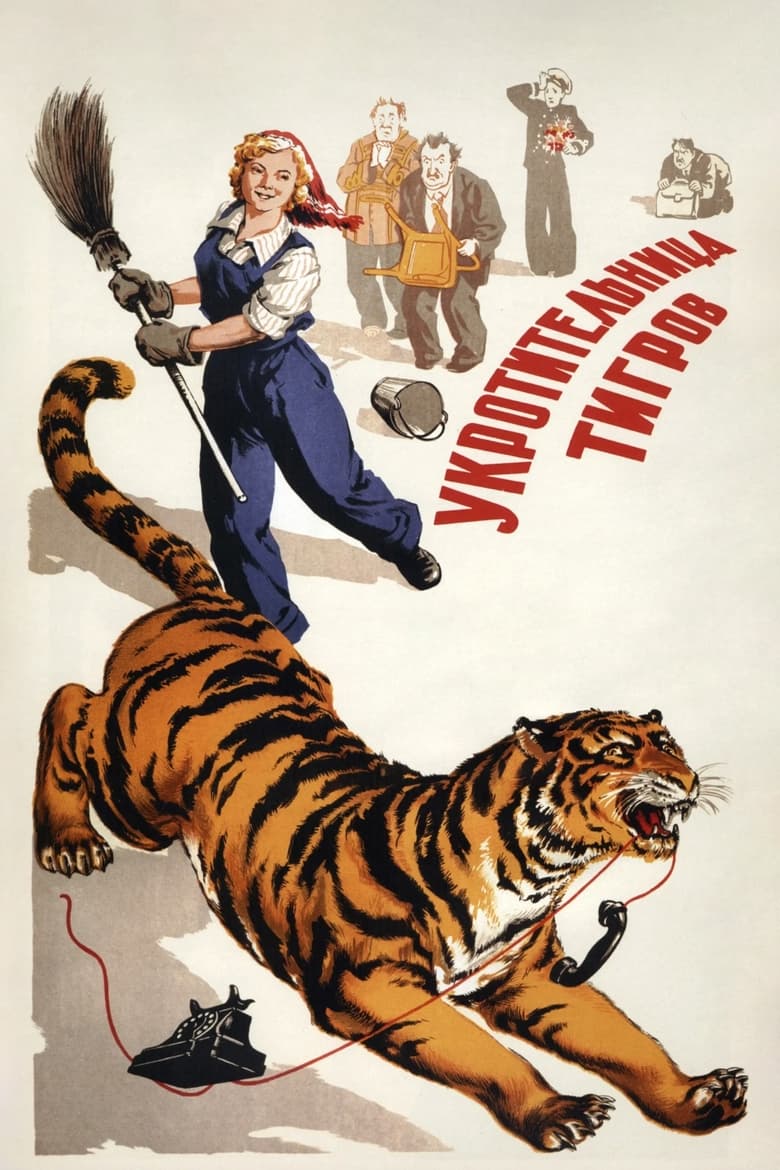
Tiger Girl
1954
Director
Nadezhda Kosheverova, Aleksandr Ivanovsky
Runtime
101 minutes
Average Rating
No ratings yetSynopsis
The story is about heiress of the circus family who organizes show "Let's get married" right in the cage for the tigers. Famous motorcyclist Fedya Yermolaev is invited to the circus for a ‘death-defying number’ – to perform a jump on a motorcycle under the big dome! Lena, a custodian at the circus, dreams of becoming a tiger tamer. Stray tigers growl and frighten. Lena enters the cage and...
Where to Watch
Diversity & Representation
Overall Score
Fair
Category Breakdown
LGBTQ+ Representation
The film lacks evidence of non-heteronormative identities or same-sex intimacy. The romantic premise appears to follow traditional heteronormative structures common to 1954 Soviet cinema.
Gender Representation
Lena disrupts conventional hierarchies by pursuing a high-risk role as a tiger tamer. Her professional aspirations prioritize female competence and autonomy over traditional domesticity.
Racial & Ethnic Diversity
The production likely reflects a homogeneous Slavic cast typical of the era. The narrative does not indicate a diverse or multi-ethnic majority cast.
Religious & Cultural Diversity
The story celebrates earned skill and labor through the circus setting. It favors the commoner over the heiress, critiquing inherited wealth and aristocratic social structures.
Disability Representation
There are no visible or invisible disabilities portrayed in the narrative. No information is available to assess this category.
Strengths
- Strong female agency through Lena's professional ambitions.
- Subversion of class hierarchies by centering on working-class circus life.
- Celebration of earned skill and industrial-era spectacle.
Areas for Improvement
- Lack of LGBTQ+ representation or non-heteronormative identities.
- Limited racial and ethnic diversity within the cast.
- Absence of disability representation in the narrative.
AI Analysis
Tiger Girl offers a progressive look at gender agency for its time, centering on a woman seeking professional mastery in a dangerous, masculine-coded field. The circus setting serves as a platform to celebrate labor and skill over inherited status. However, the film is limited by the historical context of mid-century Soviet cinema. It lacks meaningful representation of LGBTQ+ identities and appears to feature a largely homogeneous cast, which restricts its broader cultural reach. Ultimately, while the film subverts class hierarchies and gender norms, its overall diversity is tempered by the era's narrow focus on racial and sexual identity.
Rate this Movie
Reviews
No reviews yet. Be the first to share your thoughts on this movie!
Use the rating form above to leave a star rating and optional review.