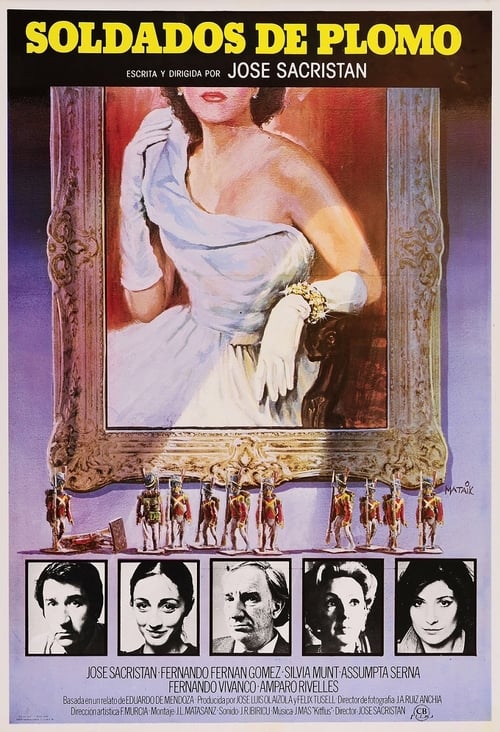
Soldados de plomo
1983
No user ratings available yet
Representation score: 4.5 out of 10

Representation Score
Fair
1986
Director
José Luis Borau
Runtime
100 minutes
Average Rating
No ratings yetNew Showbiz Analysis
Tata Mía is a character-driven drama focusing on the psychological and social transitions of a woman moving from religious confinement to secular life. The film highlights the tension between tradition and modernity, critiquing institutional authority and the changes brought by modernization. However, it lacks clear representation of LGBTQ+ identities or diverse racial casting. The film's exploration of gendered ability to act and cultural shifts is strong, but it does not fully address multi-layered issues. Overall, Tata Mía offers a nuanced look at identity and social change, though its diversity representation remains somewhat limited.
Category Breakdown
The story focuses on the protagonist's journey from a religious environment to a secular society, with no clear indication of LGBTQ+ identities or non-straight relationships.
Elvira, a central female character, navigates her own path and asserts her independence by leaving a restrictive convent, challenging traditional submissive roles.
The film moves between Paraguayan roots and a Madrid setting, but the extent of its diverse casting is not clearly defined.
The movie examines the conflict between traditional religious practices and modern society, deconstructing nostalgic views by showing the protagonist facing a rapidly evolving Spain.
There is no mention of characters with visible or invisible disabilities in the provided information.
Present on Screen
Limited or Absent
Official Synopsis
Elvira, daughter of a disgraced military, who entered a convent at a young age leaves him and returns home to settle in Madrid with his beloved nanny, seeking help to overcome their crisis. However, the country has changed so much in his years of confinement that has little or nothing to do with his childhood memories ...
1983
1983

1962

1976

1974

1963

1986

2018
No reviews yet. Be the first to share your thoughts on this movie!
Use the rating form above to leave a star rating and optional review.