
The Tale of the Fisherman and the Goldfish
1950
No user ratings available yet
Representation score: 2.9 out of 10
Representation Score
Fair
1951
Director
Jiří Trnka
Runtime
87 minutes
Average Rating
No ratings yetNew Showbiz Analysis
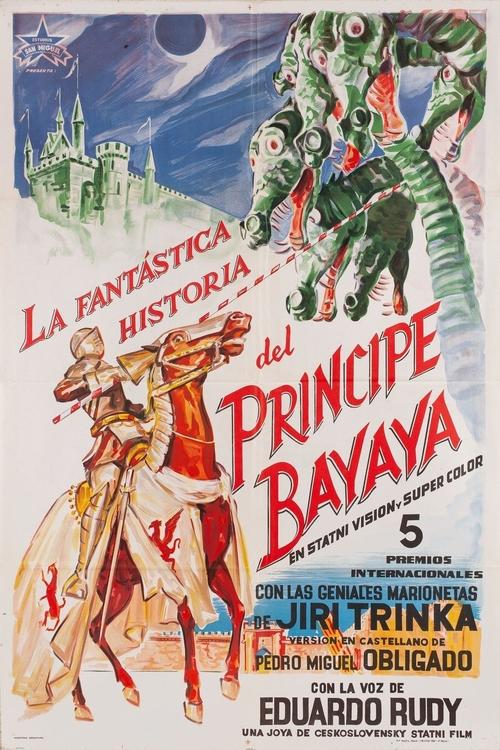
Prince Bayaya functions as a folk-inspired fantasy that prioritizes class-based ability to act over established hierarchies. By centering a peasant protagonist who challenges a wicked lord and royal establishment, the film subverts traditional social structures. While the film excels in its critique of aristocratic corruption and feudal power, it remains limited by conventional romantic clichés and a lack of explicit LGBTQ+ or racial diversity. The focus is primarily on the tension between the individual and institutional authority.
Category Breakdown
The film follows a traditional romantic storyline where the protagonist wins the heart of the youngest princess, adhering to conventional fairy-tale clichés.
The narrative disrupts hierarchies by positioning a young peasant as the primary agent of change. While the princesses initially lack autonomy due to evil spirits, the peasant becomes the central force.
Rooted in Central European folklore, the film focuses on class-based distinctions rather than racial ones. There is no evidence of diverse casting or inclusion of non-human species.
The story critiques traditional power structures by framing the aristocracy as entities requiring correction. The protagonist's journey through spiritual realms suggests a non-dogmatic approach to morality.
The narrative contains no information regarding characters with physical, sensory, or neurodivergent disabilities.
Present on Screen
Limited or Absent
Official Synopsis
Bayaya, a young peasant, protected by the spirit of his dead mother, arrives at the castle of the King, where he entertains his three daughters. He soon realizes that the three princesses are nagged by evil spirits. The little peasant manages to rid them of them, fights a duel with a wicked lord who wanted to marry one of the three princesses. He finally wins the heart of the youngest sister while saving the soul of his mother who was in purgatory.
1950

1957

1952
1980

1979
1986

2000
1981
No reviews yet. Be the first to share your thoughts on this movie!
Use the rating form above to leave a star rating and optional review.