Over the Sky
2020
No user ratings available yet
Representation score: 5.0 out of 10
Representation Score
Good
2014
Director
Yasuhiro Yoshiura
Runtime
26 minutes
Average Rating
No ratings yetNew Showbiz Analysis
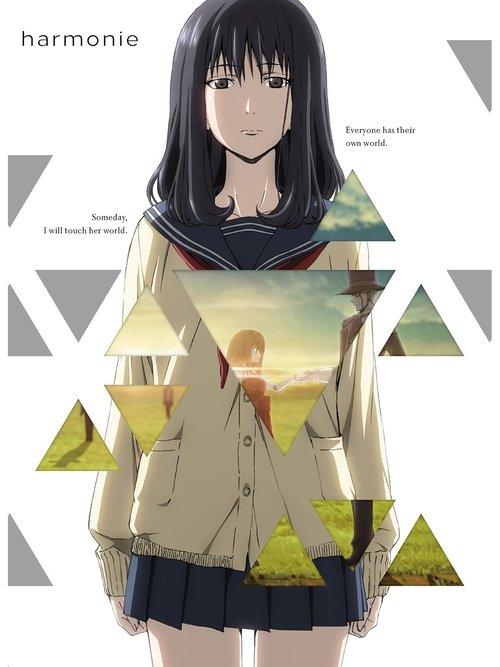
Harmonie is a character-driven study of social stratification within a Japanese classroom. It moves away from high-concept melodrama to examine the subtle, isolating dynamics of modern youth and the friction between different social strata. The film excels in its atmospheric realism, using the concept of 'internal worlds' to explore how individuals navigate social barriers. It avoids simplified views of social integration, opting for a more complex look at identity within a collective. However, the setting is culturally specific and homogeneous, which limits ethnic diversity. While the psychological depth allows for themes of isolation, the lack of explicit representation in certain categories keeps the overall score moderate.
Category Breakdown
The film delves into subtle, unspoken emotional connections among students. Though specific LGBTQ identities are not explicitly confirmed, the focus on inner worlds suggests a space for nuanced, non-traditional social bonds.
The narrative dismantles classroom hierarchies by centering Akio's emotional perspective. It steers clear of traditional romantic clichés, focusing instead on the psychological distance between genders and social groups.
As a localized Japanese production, the film portrays a homogeneous classroom environment. It maintains a grounded, culturally specific realism rather than showcasing significant racial blending.
The story emphasizes subjective, existentialist experiences over traditional institutional or religious guidance. It critiques social cohesion by depicting social circles as complex, potentially impenetrable structures.
No explicit disabilities are mentioned. However, the thematic focus on isolation and psychological barriers provides a framework that could accommodate explorations of social anxiety or neurodivergence.
Present on Screen
Limited or Absent
Official Synopsis
Every person has his or her own little world. Among the 34 bustling students of classroom 2-1, there are many such worlds. Akio Honjou's world—my world—is filled with passionate talk about last night's anime with Yoshida, Watanabe, and other friends. It's an fun, comfortable place... But, I always wonder. Wonder about the world of Juri Makina, smiling and surrounded by gorgeous friends on the other side of the classroom. One day, I enter her world. But it's not as simple as it sounds.
2020

2013

2007
2016
2021

2024

2019

2017
No reviews yet. Be the first to share your thoughts on this movie!
Use the rating form above to leave a star rating and optional review.