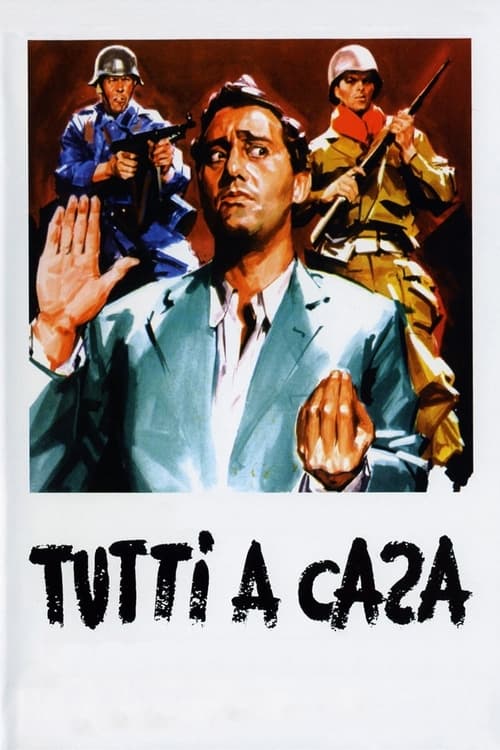
Everybody Go Home!
1960
No user ratings available yet
Representation score: 5.2 out of 10
Representation Score
Fair
1959
ApprovedDirector
Mario Monicelli
Runtime
137 minutes
Average Rating
No ratings yetNew Showbiz Analysis
Mario Monicelli’s work subverts the traditional war epic by focusing on the struggles of ordinary people. While the film lacks diversity in terms of gender and sexual orientation, it excels in its cultural critique of state power and institutional failures. The narrative emphasizes the lived experiences of the working class, avoiding a monolithic portrayal of the Italian soldier by highlighting regional and socioeconomic divisions. Ultimately, the film's strength lies in its anti-establishment tone. It replaces nationalist myth-making with a nuanced view of ethics, where survival becomes a necessary response to a corrupt military command.
Category Breakdown
The film features an all-male cast in a military setting, with no visible LGBTQ+ characters or non-cisgender identities.
The story focuses on a strictly patriarchal environment where women are mostly absent, serving only as distant memories or motivations rather than active participants.
The cast is ethnically uniform, emphasizing Italian regional identities and highlighting the socioeconomic tension between the educated class and the peasantry.
The film sharply critiques Western institutions and patriotism, portraying the military hierarchy as a corrupt system that exploits the working class.
Disability is represented through the physical trauma of combat, underscoring the futility of war without giving characters much control over their lives.
Present on Screen
Limited or Absent
Official Synopsis
Italy, 1916. Oreste Jacovacci and Giovanni Busacca are called, as all the Italian youths, to serve the army in the WWI. They both try in every way to avoid serving the army.
1960
1966
1957
1971
1963

2016
2006
1976
No reviews yet. Be the first to share your thoughts on this movie!
Use the rating form above to leave a star rating and optional review.