Aida
1953
No user ratings available yet
Representation score: 1.8 out of 10
Representation Score
Limited
1935
Director
Carmine Gallone
Runtime
87 minutes
Average Rating
No ratings yetNew Showbiz Analysis
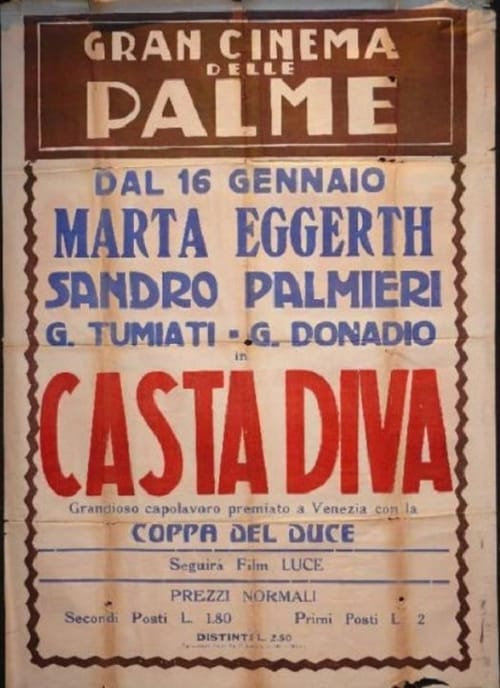
Casta diva functions primarily as a celebration of classical European artistry and historical prestige. It succeeds in centering female professional ability to act through the lens of the divine singer, providing a platform for female talent to drive the narrative spectacle. However, the film remains deeply rooted in the traditional social and cultural hierarchies of its era. The narrative prioritizes romantic melodrama and straight-centered structures, offering little room for diverse identities or the deconstruction of systemic power dynamics. Ultimately, the work is a period-specific musical drama that reflects the Eurocentric cinematic norms of the 1930s, focusing on individual passion within a very narrow cultural framework.
Category Breakdown
The film follows a traditional romantic storyline centered on Vincenzo Bellini and his love interests. It adheres to the assumption that everyone is straight or cisgender, without depicting any non-assuming gender matches what was assigned at birth identities or same-sex intimacy.
While the plot revolves around Bellini, the narrative weight is carried by the female protagonist's professional triumphs. The operatic stage provides a space where women's ability to drive the story and showcase their talents is highlighted.
The production is largely homogeneous, reflecting the era's focus on Italian operatic history. The cast is primarily European, with minor international variety provided by American and Polish performers.
The film romanticizes high-society Western traditions and the prestige of the operatic institution. It focuses on the personal struggles of the artist rather than critiquing Western religious or social structures.
There is no discernible evidence regarding the portrayal of physical or neurodivergent disabilities in this production.
Present on Screen
Limited or Absent
Official Synopsis
Martha Eggerth heads the cast of Casta Diva, but the central character is famed Italian composer Vincenzo Bellini, here played by American actor Phillips Holmes. Paying but scant attention the facts, the film concentrates on Bellini's colorful love life. Evidently the film went through several rewriting processes, as witness the curious performances of Donald Calthrop and Arthur Margetson, whose characters do complete about-faces halfway through the story. Amidst so many British accents, Martha Eggerth's Polish intonations seem out of place, but she photographs beautifully and sings quite well. Casta Diva was attractively filmed on location in Naples. Not to be confused with the 1954 remake (by Gallone himself) or to the English language version "The Divine Spark" (also directed by Gallone and starred by Eggerth).
1953
1994
1953
2015
1991
2024
1951
2001
No reviews yet. Be the first to share your thoughts on this movie!
Use the rating form above to leave a star rating and optional review.