
Paris in August
1966
No user ratings available yet
Representation score: 1.9 out of 10
Representation Score
Limited
1967
GPDirector
Georges Lautner
Runtime
95 minutes
Average Rating
No ratings yetNew Showbiz Analysis
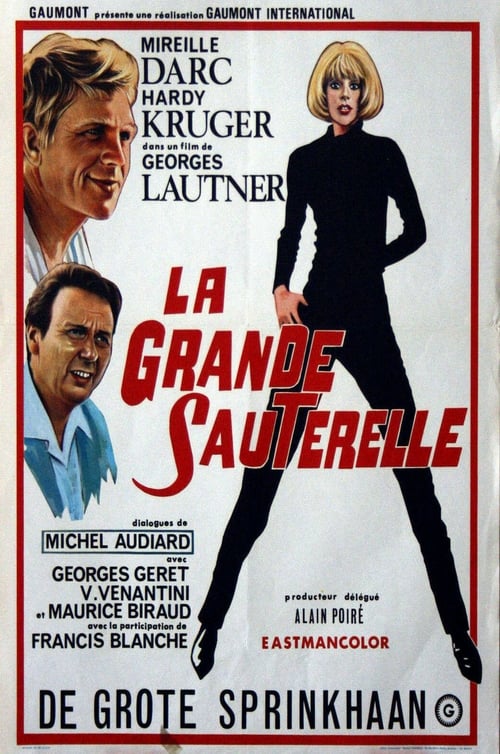
The Big Grasshopper is a period-specific romantic comedy that heavily relies on the genre conventions of the late 1960s. While the international setting offers a departure from a localized domestic story, the film does not disrupt traditional social hierarchies. The narrative revolves around a standard romantic adventure involving kidnapping and hitmen. It functions primarily as an escapist piece rather than a vehicle for exploring complex identities or cultural themes. Overall, the film adheres to the cinematic frameworks of its time, prioritizing genre conventions over contemporary social issues.
Category Breakdown
The film centers on a traditional romance between a male protagonist and a female lead. It does not include any non-straight or non-cisgender identities or same-sex relationships.
Salène is a central female character in a romantic relationship. However, the film follows conventional gender roles typical of the mid-20th century without challenging these hierarchies.
Set in Beirut, the film offers a non-Western geographical context and cultural backdrop. It is unclear whether the movie explores ethnic identity or employs actors from diverse backgrounds in roles traditionally associated with different ethnicities.
The story unfolds in a transnational setting, providing an escape from a purely Western perspective. The plot emphasizes adventure and escapism rather than critiquing religious or social structures.
The film does not feature any characters with visible or invisible disabilities. There is no indication of neurodivergence or physical impairments among the characters.
Present on Screen
Limited or Absent
Official Synopsis
While he is trying to escape from a hit man, Carl is setting up a kidnapping in Beirut. He gets lost on his way, falling in love with Salène, a.k.a. "La grande sauterelle"...
1966
1976
1974
1973
1970
1966
1955

1970
No reviews yet. Be the first to share your thoughts on this movie!
Use the rating form above to leave a star rating and optional review.