
Them and Us
1976
No user ratings available yet
Diversity score: 5.0 out of 10
1969
Director
Øyvind Vennerød
Runtime
94 minutes
Average Rating
No ratings yetSynopsis
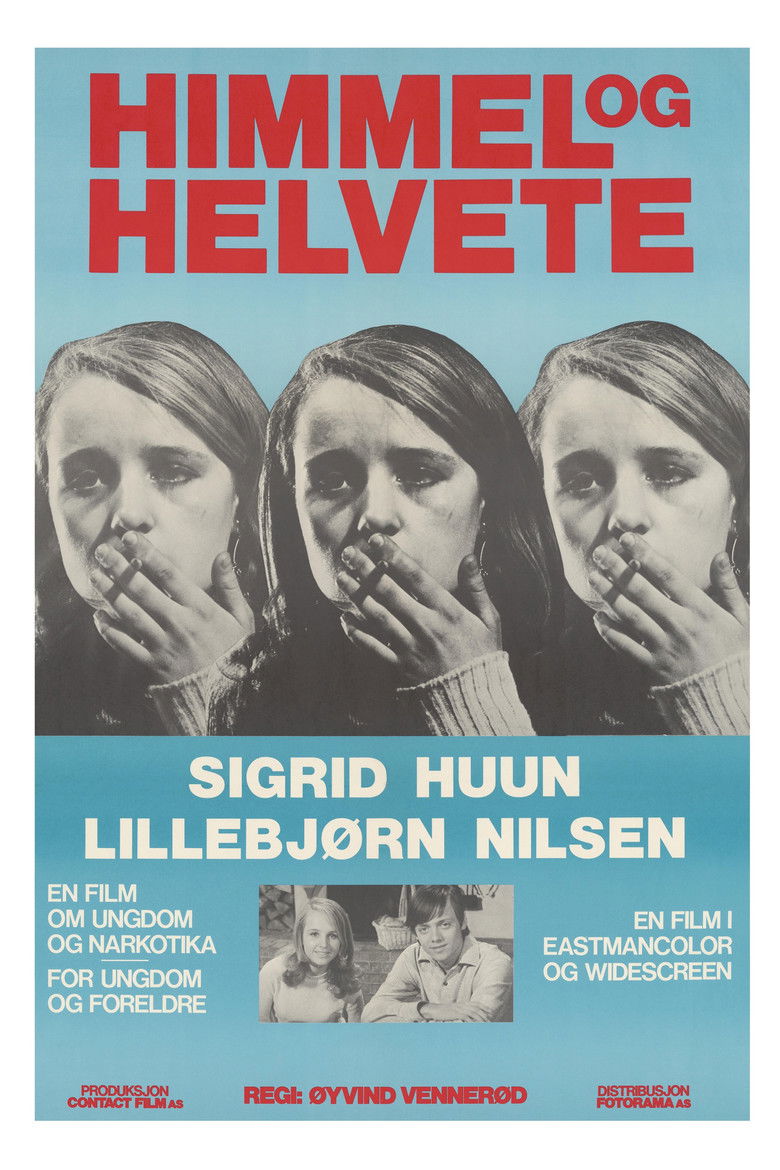
Norwegian propaganda film and cult drama about Eva (16) and Arne (17), both from well established homes, attend a class where a professor says that cannabis is safer than alcohol. Together with some friends they decide to try the drug. The start of a drug hell for all involved. The film was poorly received by the critics, but it nonetheless became one of the highest-grossing theater films in Norway in 1969.
Overall Score
Fair
Category Breakdown
LGBTQ+ Representation
The film lacks explicit evidence of LGBTQ+ characters or non-heteronormative identities. The narrative focuses on the adolescent experiences of Eva and Arne within a traditional social framework.
Gender Representation
Eva, a female protagonist, sits at the center of a transformative and destructive arc. While she avoids a secondary role, the film does not clearly subvert gender hierarchies.
Racial & Ethnic Diversity
Reflecting the 1969 Norwegian cinematic landscape, the film appears demographically homogeneous. There is no evidence of race-bent casting or a non-Anglo-Saxon majority.
Religious & Cultural Diversity
The film critiques institutional authority and traditional morality by depicting a professor advocating for cannabis. It explores the breakdown of middle-class stability and the family unit.
Disability Representation
There is no documented inclusion of characters with physical or neurodivergent disabilities. The narrative focuses on chemical dependency rather than pre-existing disabilities.
Strengths
Areas for Improvement
AI Analysis
Heaven and Hell serves as a provocative social critique of the late 1960s rather than a study in intersectional identity. Its strength lies in its willingness to challenge the infallibility of social institutions and the stability of the middle-class home. However, the film remains limited by the demographic norms of its era. It lacks meaningful representation of racial, LGBTQ+, or disability-related identities, focusing instead on a localized, culturally specific Norwegian experience. Ultimately, the film's progressive value is found in its thematic disruption of authority and its exploration of systemic disillusionment through the lens of youth autonomy.
1976

1994
1971

1983

2008

1998

2018

1990
1969

2012

2001

2019
No reviews yet. Be the first to share your thoughts on this movie!
Use the rating form above to leave a star rating and optional review.