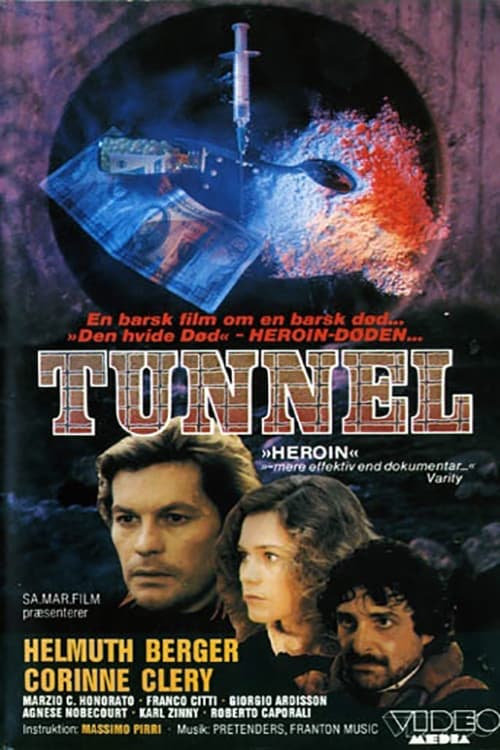
Fatal Fix
1980
No user ratings available yet
Representation score: 6.8 out of 10

Representation Score
Excellent
1983
Director
Claudio Caligari
Runtime
89 minutes
Average Rating
No ratings yetNew Showbiz Analysis
Claudio Caligari’s work provides a raw, naturalist look at social marginalization in 1980s Rome. By focusing on heroin addicts, the film deconstructs polished social facades and challenges the traditional notion of a productive capitalist framework. The film's strength lies in its refusal to provide easy moral resolutions or traditional hero archetypes. Instead, it offers a sophisticated deconstruction of the social contract through a lens of bleak, secular realism. However, the focus on systemic decay and addiction-driven survival means that specific identity-based representations, such as LGBTQ+ arcs or explicit racial casting, remain secondary to the central theme of social alienation.
Category Breakdown
The film focuses on the shared experience of addiction rather than specific LGBTQ+ relationship arcs. Non-straight identities appear incidentally in the context of broader social issues.
Traditional gender hierarchies are challenged by presenting characters without social status. The narrative avoids the cliché of the stable male leader, emphasizing shared vulnerability instead.
Set in 1980s Rome, the film depicts a fragmented urban reality rather than an idealized version of Italian life. Specific details about racial casting are not explicitly confirmed.
The film critiques institutional stability and the sanctity of the family unit. It portrays antisocial behavior as a survival mechanism within a corrupt system.
The narrative treats the physiological and psychological effects of addiction as a pervasive disability. It centers on the lived reality of neurochemical dependency rather than using it as a plot device.
Present on Screen
Limited or Absent
Official Synopsis
The alienating and repetitive life of a group of heroin junkies in 1980s Rome.
1980
1971
1998

2015

1981
1981
2011

2015
No reviews yet. Be the first to share your thoughts on this movie!
Use the rating form above to leave a star rating and optional review.