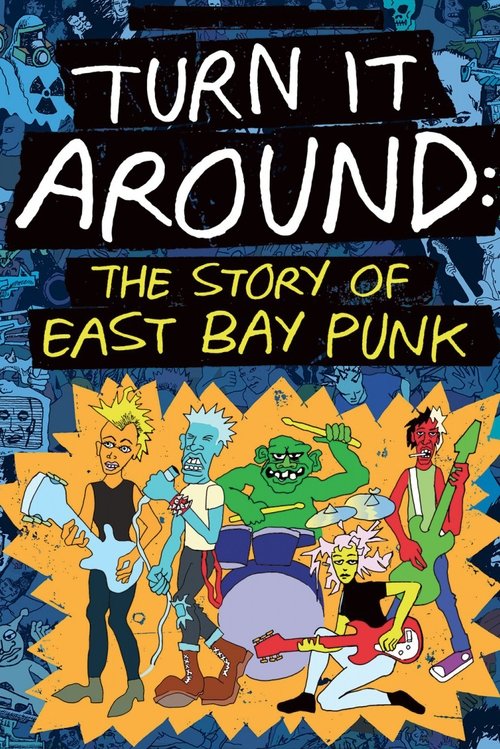
Turn It Around: The Story of East Bay Punk
2017
No user ratings available yet
Representation score: 9.2 out of 10

Representation Score
Fair
2015
Not RatedDirector
Scott Crawford
Runtime
103 minutes
Average Rating
No ratings yetNew Showbiz Analysis
Salad Days serves as a vital historical corrective by documenting a decentralized, anti-establishment community. Its greatest achievement is disrupting the myth of a white-only punk history through the inclusion of Black musicians like Bad Brains. The film's strength lies in its celebration of systemic alternatives to capitalist structures and the power of grassroots ability to act. It successfully portrays a movement defined by its rejection of mainstream industry standards. However, the documentary is bound by the demographic realities of its subject matter. It reflects the male-dominated social structures of the 1980s and lacks explicit, sustained focus on queer narratives.
Category Breakdown
The film captures a subculture that historically served as a sanctuary for non-straight identities. However, representation remains contextual rather than central to the primary character arcs.
The narrative reflects the predominantly male-driven demographic of the 1980s hardcore scene. Central protagonists often reinforce the traditional masculine archetypes of that era.
The documentary excels by highlighting the intersection of race and genre. Centering bands like Bad Brains disrupts the expectation of a monolithic, white-centric punk history.
The film celebrates anti-authoritarianism and the rejection of corporate hegemony. It frames the DIY ethic as a direct critique of capitalist music industry structures.
There is insufficient evidence to evaluate the portrayal of specific disabilities or neurodivergence within the documentary's primary subjects.
Present on Screen
Limited or Absent
Official Synopsis
"Salad Days: A Decade of Punk in Washington, DC (1980-90)" examines the early DIY punk scene in the Nation's Capital. It was a decade when seminal bands like Bad Brains, Minor Threat, Government Issue, Scream, Void, Faith, Rites of Spring, Marginal Man, Fugazi, and others released their own records and booked their own shows-without major record label constraints or mainstream media scrutiny. Contextually, it was a cultural watershed that predated the alternative music explosion of the 1990s (and the industry's subsequent implosion). Thirty years later, DC's original DIY punk spirit serves as a reminder of the hopefulness of youth, the power of community and the strength of conviction.
2017
1981
2012
2013
1982
2005
2010
2013
No reviews yet. Be the first to share your thoughts on this movie!
Use the rating form above to leave a star rating and optional review.