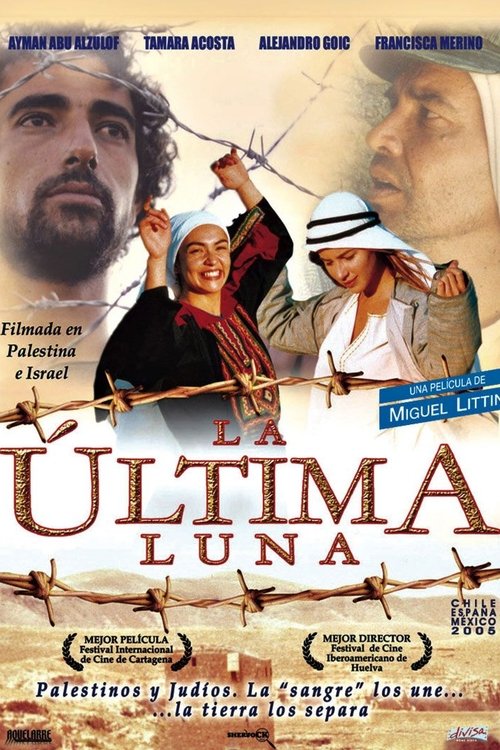
La última luna
2005
No user ratings available yet
Representation score: 6.8 out of 10

Representation Score
Fair
1992
Director
Mohammad Malas
Runtime
116 minutes
Average Rating
No ratings yetNew Showbiz Analysis
Mohammad Malas's *The Night* is a profound exploration of post-colonial storytelling. It succeeds most notably by reclaiming a underrepresented history, offering a powerful counter-narrative to the erasure of Palestinian identity and the specific cultural context of the Golan Heights. However, the film's internal dynamics remain somewhat traditional. The narrative is heavily anchored in patriarchal structures, focusing on the male protagonist's relationship with his father and the pursuit of a masculine ideal of an honorable death. Ultimately, while it lacks diversity in gender and LGBTQ+ representation, its commitment to ethnic and cultural authenticity makes it a vital piece of non-Western cinema.
Category Breakdown
The film does not prominently feature LGBTQ+ identities or non-cisgender expressions. Instead, it emphasizes ancestral and communal ties, particularly the reclaiming of a patriarchal lineage, without delving into queer experiences or domestic life.
The perspective is primarily through a male protagonist's struggle with his father's legacy. While the mother's memory adds emotional depth, the film centers on traditional masculine ideals of honor and resistance.
The film stands out by highlighting Palestinian resistance and the history of Quneitra. It challenges Western-centric historical views by giving authentic ability to act to characters navigating the aftermath of occupation.
The narrative is explicitly anti-colonial, criticizing external political forces and their impact on local sovereignty. It prioritizes localized, subjective truths over standardized Western historical accounts.
There is no significant portrayal of physical or neurodivergent disabilities. Any sense of impairment seems metaphorical, representing the psychological wounds of a displaced population.
Present on Screen
Limited or Absent
Official Synopsis
In the destroyed city of Quneitra is the grave of a resistance fighter for Palestine. His son, the director, tries to restore the dead man's history by mixing echoes of his mother's memory and his desire to give his father a more honorable death. Through the daily lives, dreams, fears, and hopes of its citizens, Malas chronicles his hometown Quneitra in the Golan Heights between 1936, the year of the first revolts against the British and Zionists in Palestine until the year of the city's destruction. He seeks to exorcise a feeling of shame and humiliation that long accompanied the image of his father and also his town, occupied by Israelis in 1967.
2005
2008
2009

2012
1986

2011
1984
1997
No reviews yet. Be the first to share your thoughts on this movie!
Use the rating form above to leave a star rating and optional review.