Jan Palach
2018
No user ratings available yet
Representation score: 4.9 out of 10
Representation Score
Good
2021
Director
Andreas Kleinert
Runtime
150 minutes
Average Rating
No ratings yetNew Showbiz Analysis
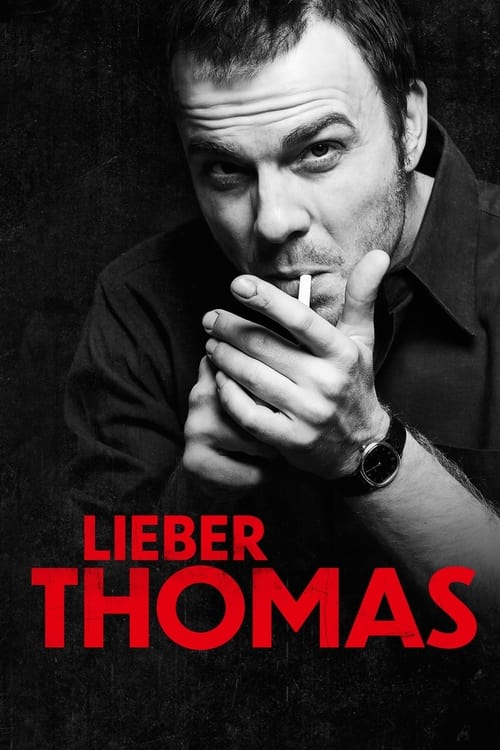
Dear Thomas is a biographical drama that explores the tension between individual ability to act and systemic oppression. Through the story of Thomas Brasch, a German-Jewish emigrant, the film examines how personal identity and artistic rebellion clash with the rigid structures of the GDR. The film dismantles traditional social pillars, such as the family unit and state authority, by depicting the father's betrayal to the Stasi. This transforms the domestic sphere into a site of political surveillance, providing a nuanced look at historical memory. While the narrative excels in critiquing ethnic and cultural issues, it focuses on a specific, individualistic struggle. The representation of identity is closely tied to political dissent and the fight for intellectual freedom within a restrictive regime.
Category Breakdown
The main character's relationship with his girlfriend, Sanda, is heterosexual. However, the film delves into themes of non-conformity and personal identity, which adds depth to the exploration of individual identity.
The film challenges the traditional patriarchal figure by showing the father as an agent of state betrayal rather than a protector. This contrasts poetic pursuits with rigid, masculine-coded state structures.
The narrative offers meaningful representation through the German-Jewish diaspora. By centering a Jewish emigrant within the GDR context, the film avoids the homogeneity often found in mid-century European dramas.
The film critiques the institutional power and state-mandated morality of the Eastern Bloc. It emphasizes the individual's truth and the archetype of the poetic rebel over traditional loyalty to the state.
There is no evidence regarding the portrayal of physical or neurodivergent disabilities in this narrative.
Present on Screen
Limited or Absent
Official Synopsis
Thomas Brasch was born as a German-Jewish emigrant in England in order to move to the young GDR with his family at the beginning of the 1950s. His father Horst is primarily interested in helping to build the new German state. But Thomas prefers to realize himself as a writer and in doing so discovers his potential as a poetic rebel. His very first play was banned and soon afterwards he lost his place at the film school. When the tanks of the Soviet Union roll through the Czech capital Prague in 1968, Brasch and his girlfriend Sanda and other students try to call for protest in the streets of Berlin - and fail. His own father betrays him to the Stasi and allows Thomas to go to prison. After being paroled, he continues to try his hand at poet writing about love, revolt and death. In the GDR, however, you don't want to have anything to do with someone like him.
2018
1985

2018
2018

1991

2018
2021
1993
No reviews yet. Be the first to share your thoughts on this movie!
Use the rating form above to leave a star rating and optional review.