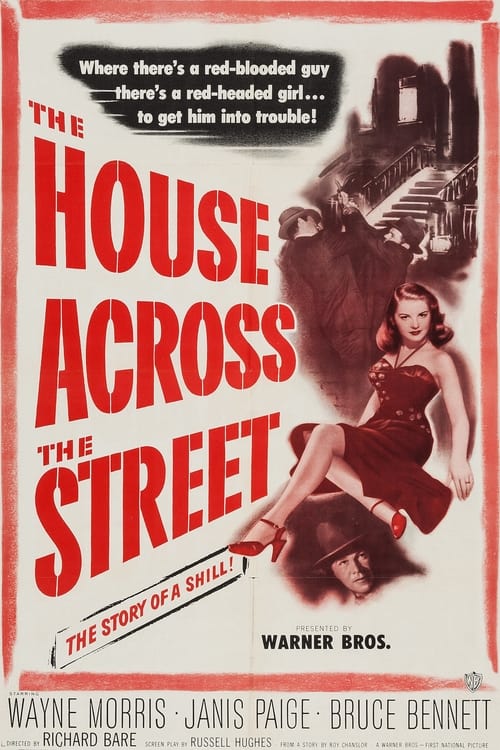
The House Across the Street
1949
No user ratings available yet
Representation score: 1.7 out of 10

Representation Score
Minimal
1934
NRDirector
Mervyn LeRoy
Runtime
75 minutes
Average Rating
No ratings yetNew Showbiz Analysis
Hi, Nellie! is a product of the 1930s studio system, prioritizing mainstream narrative cohesion and commercial appeal. The story centers on a male protagonist's professional setbacks and his quest to reclaim status within a journalistic hierarchy. The film adheres to the social and structural hierarchies of its era. It lacks the intentionality required to disrupt established formulas or provide meaningful multi-layered representation, focusing instead on traditional professional and social norms. Ultimately, the work functions as a standard period piece that reinforces institutional stability and conventional social structures rather than challenging them.
Category Breakdown
The film follows conventional romantic and social structures typical of 1934. There is no evidence of LGBTQ+ characters or narratives that question the assumption that everyone is straight or cisgender.
The plot is driven by men's control over the story and professional competition within a male-dominated journalistic hierarchy. It reinforces traditional roles of male professional pursuit rather than challenging gender hierarchies.
The story focuses on a white, middle-class professional environment. It appears to adhere to the era's standard of racial homogeneity without suggesting intentional integration.
Themes revolve around professional integrity and the restoration of social order. The narrative reinforces institutional stability and traditional notions of reputation rather than critiquing Western institutions.
The film contains no mention of characters with visible or invisible disabilities. No representation of disability is present in the narrative.
Present on Screen
Limited or Absent
Official Synopsis
Managing Editor Brad Bradshaw refuses to run a story linking the disappearance of Frank Canfield with embezzlement of the bank. He considers Frank a straight shooter and he goes easy on the story. Every other paper goes with the story that Frank took the money and Brad is demoted, by the publisher, to the Heartthrob column - writing advice to the lovelorn. After feeling sorry for himself for two months, he takes the column seriously and makes it the talk of the town. But Brad still wants his old job back so he will have to find Canfield and the missing money.
1949

1933
1938
1940

1940

1928
1934
1933
No reviews yet. Be the first to share your thoughts on this movie!
Use the rating form above to leave a star rating and optional review.