
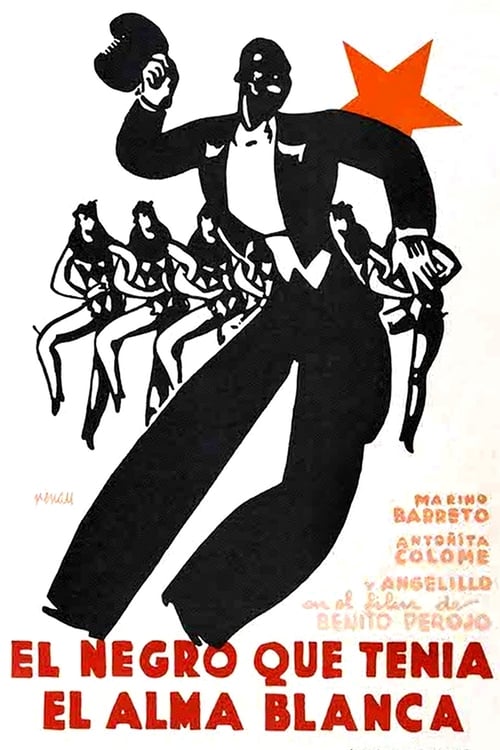
The Black Man Who Had a White Soul
1951
No user ratings available yet
Representation score: 3.3 out of 10
Representation Score
Limited
1927
Director
Benito Perojo
Runtime
88 minutes
Average Rating
No ratings yetNew Showbiz Analysis
The film aims to explore complex racial dynamics and the pursuit of ability to act in a globalized world. It features a Black protagonist achieving international fame, offering a narrative of upward mobility. However, these efforts are undermined by the era's reliance on racial caricatures. The use of blackface creates a significant barrier to meaningful representation, tying the film to the systemic hierarchies of the 1920s. Ultimately, the work remains constrained by Eurocentric definitions of identity, failing to fully disrupt the traditional social structures it depicts.
Category Breakdown
The film focuses on a heterosexual romantic conflict involving racial compatibility. It does not depict any LGBTQ+ identities or same-sex intimacy, sticking to traditional 1920s romantic structures.
The plot revolves around the male protagonist's journey toward stardom. The female lead rejects him, exercising ability to act, but her role mainly serves to catalyze his emotional growth.
The story explores racial identity and the immigrant experience, moving from Cuba to Paris. However, the use of blackface by a white actor reinforces systemic hierarchies instead of offering authentic representation.
The film critiques social stratification in Cuba through the protagonist's departure. The 'white soul' motif suggests a problematic negotiation between racial identity and Western cultural standards.
There are no visible or invisible disabilities portrayed as central to the narrative arc.
Present on Screen
Limited or Absent
Official Synopsis
Pedro (played by a white actor in blackface), a son of a former slave, leaves Cuba (where he was being mistreated for being black) to seek his fortune in Paris. While working as a bellboy at a dance club, his dancing prowess is discovered and then he goes to become a famous dancer of the Charleston in the city. He falls in love with his dancing partner, who could not stand the thought of marrying him because of his skin color.
1951
1966
1938

1920
1920
1930
1929
1965
No reviews yet. Be the first to share your thoughts on this movie!
Use the rating form above to leave a star rating and optional review.