Stray
2021
No user ratings available yet
Representation score: 5.7 out of 10
Representation Score
Excellent
1998
Director
Turmunkh Dorjkhand, Peter Brosens
Runtime
91 minutes
Average Rating
No ratings yetNew Showbiz Analysis
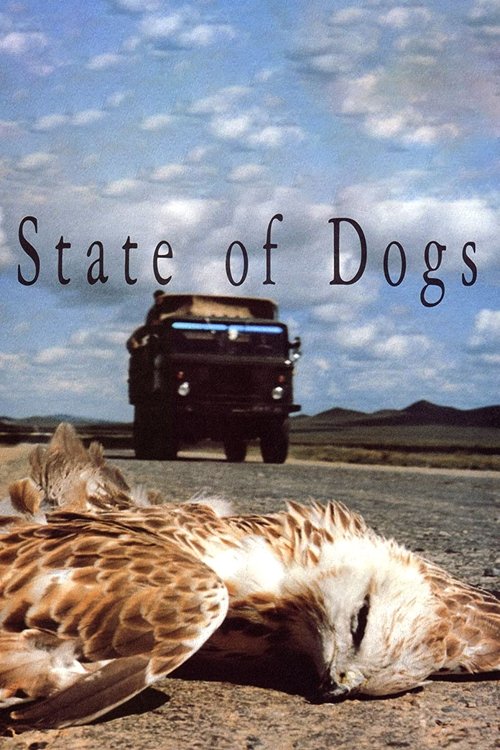
State of Dogs challenges Western-centric documentary norms by focusing on the socio-political realities of Ulan Bator in Mongolia. Through its narrative, the film offers a strong counter-narrative to homogeneous mainstream media. The film's critique of institutional power is particularly effective, using the experiences of animals to highlight the struggles of underrepresented entities against state authority. However, the film does not delve deeply into human identity markers such as gender or sexuality. The narrative primarily explores the intersection of human and non-human existence rather than traditional human social dynamics.
Category Breakdown
The film does not include any explicit LGBTQ+ characters or narratives. Its primary focus is on the treatment of animals in Ulan Bator, avoiding discussions of human sexuality.
Gender dynamics are not explicitly explored. The documentary shifts focus away from typical human protagonists, leading to a moderate depiction of gender hierarchies.
The film highlights a non-Western setting in Mongolia. By emphasizing the local ability to act and unique cultural landscape of Ulan Bator, it disrupts Western-centric documentary conventions.
The narrative criticizes state-sanctioned authority and institutional oppression. It portrays the struggle of the dog, Baatar, against centralized control and mandated order.
No specific mention of human physical disabilities is made. However, the dogs' marginal existence serves as a metaphor for those navigating systemic neglect.
Present on Screen
Limited or Absent
Official Synopsis
In Ulan Bator, Mongolia, the cur Baatar is shot by a hunter hired by the authorities to get rid off the dogs in the city...
2021
1978
2001
2004

2019

2017
1995

2010
No reviews yet. Be the first to share your thoughts on this movie!
Use the rating form above to leave a star rating and optional review.