There Goes My Heart
1938
No user ratings available yet
Representation score: 3.5 out of 10
Representation Score
Limited
1939
Director
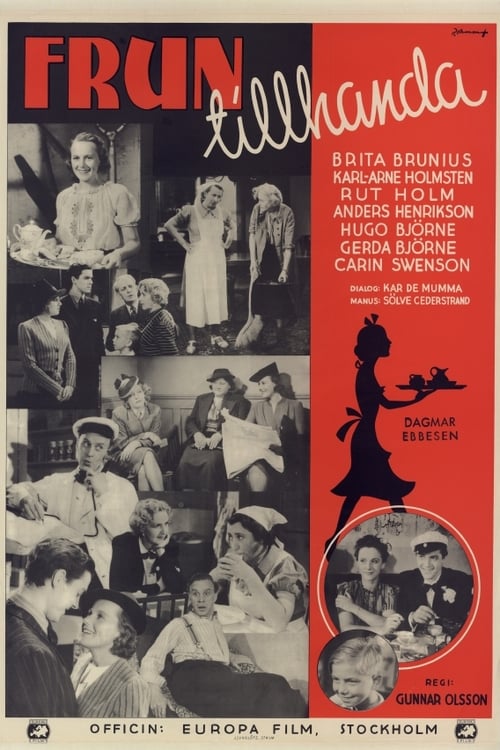
Gunnar Olsson
Runtime
86 minutes
Average Rating
No ratings yetNew Showbiz Analysis
To Help the Lady of the House is a period comedy that closely follows the social norms of 1930s Sweden. While it slightly deviates from typical domestic narratives by giving the female lead professional independence, it remains firmly anchored in traditional storytelling. The film's strength lies in its use of a class-crossing device. By placing a social worker in a housemaid's role, the story provides a unique perspective on working-class life and social inequalities. However, the film lacks meaningful diversity in terms of race, sexuality, or disability. It prioritizes a conventional romantic resolution over a deeper systemic social critique.
Category Breakdown
The film follows a traditional romantic storyline between Ingrid Eriksson and Åke. There are no queer narratives or characters with non-conforming gender identities.
Ingrid has intellectual independence as a social worker investigating class issues. However, the story concludes with a conventional romantic resolution.
The film reflects the demographic uniformity of 1939 Sweden. There are no characters from non-Nordic backgrounds or racial diversity.
The plot touches on social welfare and class structures through the protagonist's work. It remains focused on character-driven comedy without a deeper systemic critique.
The story does not include any characters dealing with physical, sensory, or neurodivergent conditions.
Present on Screen
Limited or Absent
Official Synopsis
Ingrid Eriksson, a social worker, decides to find out something about the problems facing housemaids and gets herself a job as one at the home of John Willman's family. John's son, Åke, falls in love with her and numerous complications arise before the course of true love runs smoothly.
1938

1936
1938

1940
1937

1946

1938

1928
No reviews yet. Be the first to share your thoughts on this movie!
Use the rating form above to leave a star rating and optional review.