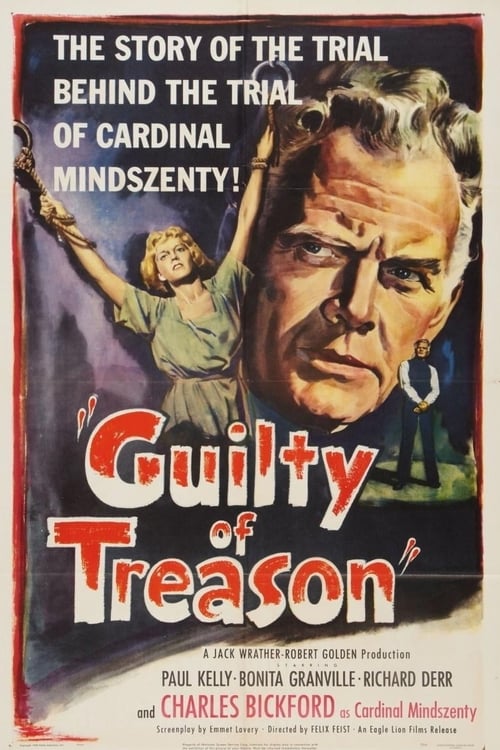
Guilty of Treason
1950
No user ratings available yet
Representation score: 1.8 out of 10

Representation Score
Minimal
1955
Director
Peter Glenville
Runtime
95 minutes
Average Rating
No ratings yetNew Showbiz Analysis
The Prisoner is a period-specific drama that operates within the traditional narrative structures of 1955. It prioritizes a centralized conflict of religious and political identity over a diverse spectrum of human experience. While the film offers a nuanced critique of state oppression and systemic power, it lacks multi-layered complexity. The story is driven by masculine archetypes and patriarchal hierarchies, reflecting the socio-political constraints of its era. Ultimately, the film's value lies in its exploration of individual ability to act against totalitarianism rather than its demographic breadth or subversion of social norms.
Category Breakdown
The film focuses on a high-stakes political and religious conflict. There is no evidence of non-straight or non-cisgender identities or same-sex intimacy within the plot.
The narrative centers on masculine archetypes of political resistance and religious authority. It prioritizes a patriarchal hierarchy between the Church and the State.
The cast reflects the homogeneous demographic norms of the mid-1950s. The story remains focused on an ideological struggle within a Western geopolitical framework.
The film explores the relationship between institutional authority and individual morality. The Cardinal serves as a symbol of traditional spiritual leadership.
There is no documented evidence regarding the inclusion of characters with physical or neurodivergent disabilities. The focus is on psychological endurance.
Present on Screen
Limited or Absent
Official Synopsis
A cardinal is arrested for treason against the state. He is a popular hero of his people, for his resistance against the Nazis during the war and his resistance when his country again fell to a totalitarian conqueror. In prison, his interrogator is determined to extract a confession of guilt, and thus destroy his power over his people.
1950
1959
1993
1981

1960
1951
2000

2005
No reviews yet. Be the first to share your thoughts on this movie!
Use the rating form above to leave a star rating and optional review.